


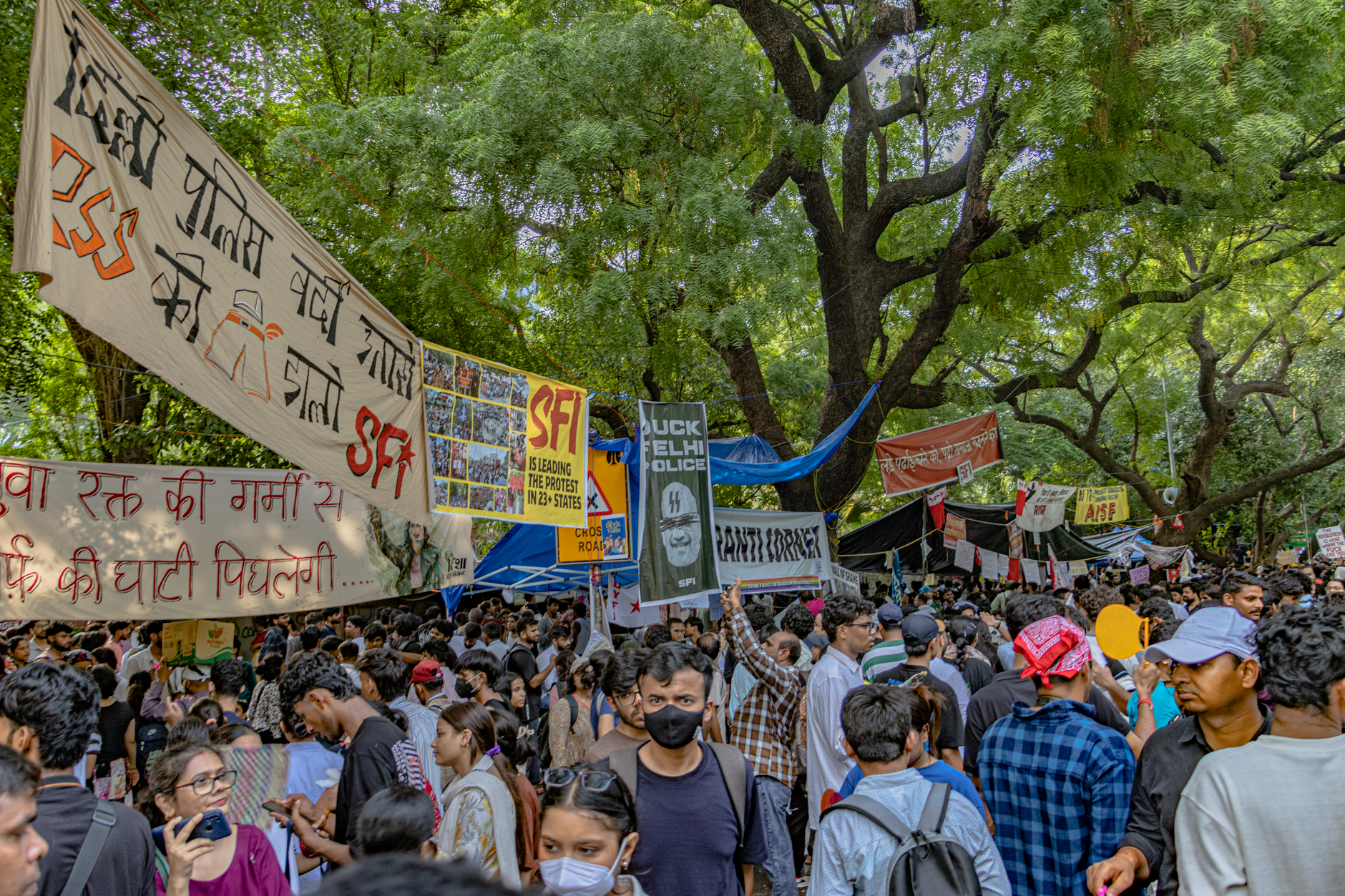
Tensions remain high at Jamia Millia Islamia in New Delhi as a prolonged standoff between the university administration and student protestors continues to disrupt campus life. The unrest, which first gained momentum on October 12, centers on the persistent student demand for the restoration of the students’ union elections. This push for democratic representation has been met with firm resistance from university officials, who have issued stern warnings regarding disciplinary and legal consequences for those involved in the ongoing agitation.
The campus environment has been significantly altered since the demonstrations began, characterized by recurring hunger strikes, the active presence of police personnel, and instances of clashes between the student body and administrative authorities. In response to the escalating situation, the university has enforced several restrictions, including a shift to online classes. Furthermore, uncertainty persists regarding housing arrangements, with reports indicating that the administration is considering the closure of hostels, leaving many women students in a state of anxiety regarding their living situation.
Despite the rigid stance taken by the university regarding disciplinary action, there have been some developments toward reconciliation. The administration has formally announced that the long-awaited students’ union elections will be conducted within a timeframe of 15 days, provided that the union constitution receives the necessary approval. As part of this latest outreach, the university has also agreed to revoke the various suspension orders and show-cause notices that were previously issued to students who participated in the protests.
The current impasse has sparked a wider conversation about the necessity of student representation and the boundaries of campus discipline. For many students, the ability to elect their union representatives is seen as a fundamental aspect of the academic experience, while the administration has emphasized the importance of maintaining order and adhering to established institutional protocols. The intersection of these competing priorities has created a complex scenario that has drawn significant attention from the wider community and education observers alike.
The recent shift to online learning reflects the administration’s attempt to manage the campus climate amidst the ongoing protest activities. By transitioning to virtual instruction, the university aims to mitigate the disruption to academic progress, although this decision has not been without criticism from those who feel that in-person campus interaction is a vital component of student life. The uncertainty regarding the status of the hostels continues to be a point of particular concern for female students, as the threat of potential closure hangs over them, forcing many to navigate the challenges of the standoff while worrying about their immediate accommodation.
Looking ahead, the successful resolution of this conflict appears to hinge on the timely approval of the union constitution. The commitment by the university to act within a two-week window following this approval represents a critical juncture for both the protesters and the administration. If the process proceeds as indicated, it may mark the beginning of a cooling-off period and the eventual resumption of normal operations at the university.
As the situation develops, the eyes of the student community remain fixed on the administration's next steps regarding the constitution. The effectiveness of the agreement to drop disciplinary actions will be tested by the ability of both sides to maintain order and communication. For now, the campus remains in a state of transition, caught between the demands for institutional reform and the constraints of administrative policy, as stakeholders await further clarity on the timeline for the upcoming union elections.








Comments