


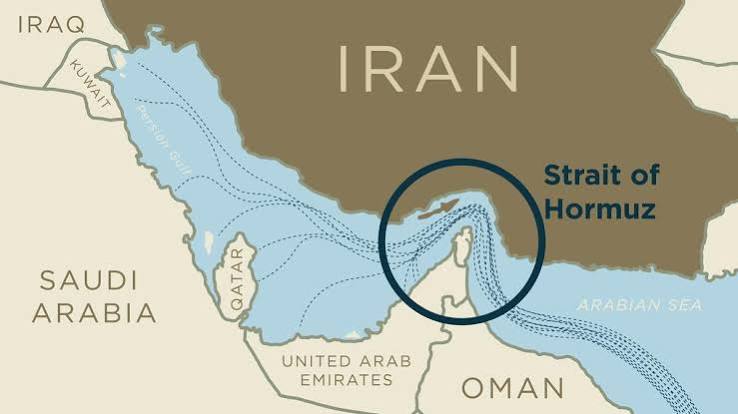
The geopolitical struggle for authority over the Strait of Hormuz has intensified this month, with both the United States and Iran asserting contradictory claims of control as a series of attacks on commercial vessels continues to disrupt one of the world’s most vital maritime arteries. According to data from the United Kingdom Maritime Trade Operations (UKMTO), at least 12 ships were attacked in the week ending October 16, though the organization noted that many incidents go unreported by masters of vessels attempting to navigate the volatile region.
The current volatility represents a significant escalation since the onset of the US-Israel conflict with Iran earlier this year. Of the 12 vessels confirmed as attacked in the recent seven-day period, reports indicate that one ship sank, two were rendered inoperable, and three sustained damage or faced uncertain outcomes. In a notable development, the UKMTO reported a new tactical approach on Saturday, involving a rocket-propelled grenade fired from a small boat, which damaged a tanker approximately 78 nautical miles northeast of Jubail, Saudi Arabia.
Despite the persistent instability, the United States maintains that its naval presence is effectively securing the waterway. US Central Command (CENTCOM) chief Brad Cooper stated in a video message that over 400 ships and 100 million barrels of oil successfully transited the strait during the past week. Cooper explicitly rejected Iranian influence, asserting that the strait is under the control of the United States and its regional partners, while characterizing the surge in attacks as an act of desperation by the Islamic Revolutionary Guard Corps (IRGC).
Conversely, Iran has challenged the narrative presented by Washington. The IRGC has reported that several vessels have struck naval mines across the waterway, insisting that the route remains unsafe for any vessel that does not coordinate passage through the Persian Gulf Strait Authority, an entity Tehran established to manage traffic during the conflict. State-run media in Iran recently broadcast footage of a supertanker allegedly on fire after striking a mine while traversing an “unauthorised” route, a claim the US military categorically denied by asserting that they have cleared the strait of mines and that vessels are instead being hit by projectiles.
The impact of these hostilities is increasingly visible in global energy markets. Kpler data indicates that oil flows through the strait averaged 11.6 million barrels per day in the week ending October 13, approximately 68 percent of pre-war levels. The instability has driven Brent crude prices to $110 a barrel, a level not seen since May. Simultaneously, the US claims its naval blockade of Iranian ports has successfully cost Tehran $25 billion in export revenue, in addition to the seizure of $350 million in cryptocurrency assets linked to Iranian financing.
As the situation remains fluid, diplomatic channels have not entirely collapsed. Regional mediators, including Qatar and Pakistan, continue to relay messages between the parties, though analysts remain skeptical of any immediate breakthrough. The ongoing maritime friction occurs against a backdrop of wider regional unrest, including Houthi attacks on Saudi energy infrastructure and their control of the Bab al-Mandeb strait, leaving the future of transit through the Strait of Hormuz uncertain.
While the United States has largely refrained from direct military retaliation to these recent maritime attacks, there is growing international concern regarding potential escalation following the US midterm elections scheduled for November 3. For now, the maritime corridor remains a contested theater, with the US emphasizing its shuttle system for energy transits while Iran maintains that its authority is necessary for secure passage through the waterway.








Comments