


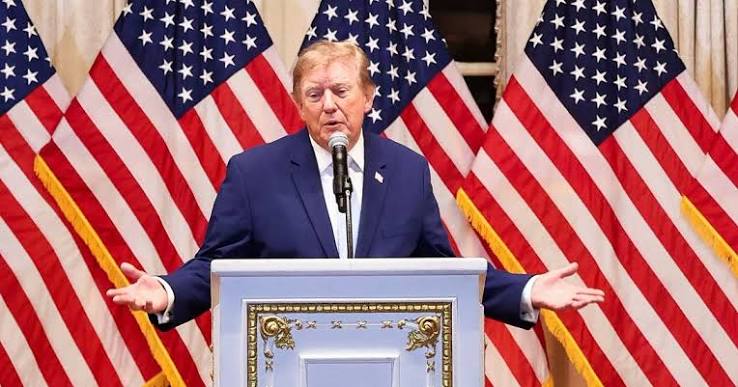
United States President Donald Trump has issued an executive order waiving a series of sanctions, restrictions, and duties targeting Russia under the Lindsey O. Graham Sanctioning Russia and Iran Act of 2026. This administrative move, formalized on Saturday, comes just weeks after the legislation was initially signed into law with the objective of pressuring Moscow over its ongoing military actions in Ukraine.
The executive order invokes a specific provision within the Graham Act that permits the President to bypass regulatory measures when deemed to be in the national interest. According to the White House, President Trump has already submitted the necessary certification and a formal report to Congress, detailing the justification for this policy shift. The waivers cover sections 112 and 113 of the Act, as well as sanctions and restrictions previously imposed under Section 102(d), which had targeted various foreign entities and individuals.
These waivers are intended to remain active until such time as the President or the Secretary of State, working in consultation with relevant officials, determines that they are no longer necessary. The administration’s primary driver for this decision is the urgent need to address rising diesel prices, which have emerged as a significant political issue in the lead-up to the November 3 midterm elections. As of September, diesel prices reached a record $6.52 per gallon, with the cost remaining elevated at approximately $6.28 by last Friday.
The policy reversal follows what the White House described as a successful dialogue between President Trump and Russian President Vladimir Putin. Under the new arrangement, Moscow has committed to an immediate supply of over 300,000 tonnes of diesel to the U.S., with further shipments anticipated throughout November and the subsequent months. Expressing his outlook on the matter via social media, President Trump stated that this energy-focused strategy, combined with U.S. control over the Strait of Hormuz, would cause diesel prices for Americans to decrease rapidly.
Despite the new waivers, the executive order maintains a framework for monitoring energy trade. It mandates that the U.S. Trade Representative, alongside other senior officials, must keep a close watch on international purchases of Russian crude oil and natural gas, as well as any efforts by third parties to evade existing sanctions. The order also establishes a provision for additional duties of 500% on certain Russian goods and 100% on goods originating from major importers of Russian energy, though these remain subject to specific exceptions.
The shift in U.S. policy toward Russian energy imports marks a notable change in stance. Previously, Washington had exerted consistent pressure on nations like India, utilizing the threat of tariffs to encourage a reduction in their reliance on Russian energy supplies. The current administration has signaled that prioritizing lower fuel costs for domestic sectors—specifically farmers, ranchers, and the trucking industry—is currently its highest priority.
Looking ahead, the effectiveness of this move in stabilizing energy prices will be closely watched as the midterm elections approach. While the administration frames the decision as a necessary measure for economic relief, the monitoring requirements under the executive order suggest that the broader regulatory landscape regarding Russian energy remains a complex and evolving component of U.S. foreign policy.







Comments