


CJI Surya Kant Says Delhi Protests Are Law And Order Issue, Outside Judicial Domain
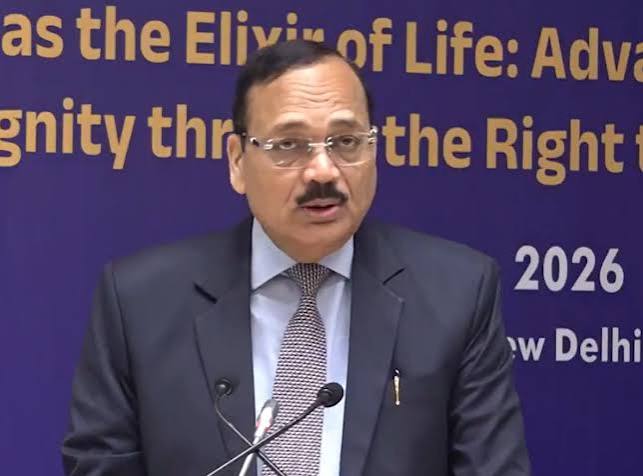
Chief Justice of India (CJI) Surya Kant addressed the recent wave of protests and security restrictions in the national capital on Monday, clarifying that these events fall under the purview of law and order administration rather than the judiciary. Speaking to journalists on the sidelines of a function commemorating the 33rd anniversary of the National Human Rights Commission in Delhi, the CJI remarked that the management of street-level developments is not within his domain.The capital has witnessed significant unrest over the past several days, primarily driven by demands for the removal of Chief Election Commissioner Gyanesh Kumar. Protesters have raised concerns regarding alleged irregularities surrounding the Special Intensive Revision of electoral rolls. The situation led to a massive security operation over the weekend, with over 20,000 security personnel deployed across Delhi. Authorities also implemented strict measures, including the closure of 45 Metro stations on Saturday and intensified checks at entry points along the city's borders, resulting in the detention of thousands, including senior leaders and four former chief ministers.During his interaction, CJI Kant also addressed requests from the INDIA bloc for a meeting regarding the electoral roll controversy. He confirmed that he had received a request for a meeting on Sunday and responded to it that same night. While the CJI initially noted that the contents of his communication were confidential, the Congress party later shared the letter on social media. In the correspondence, the CJI explained that meeting with political leaders to discuss issues already pending before the court would be inconsistent with judicial propriety and the constitutional principle of the separation of powers.The CJI emphasized that while the Supreme Court is open to all, it does not hold administrative authority over the specific grievances raised by the political opposition. He clarified that any citizen or elected representative seeking intervention regarding these issues should follow established legal procedures. Instead of engaging in administrative memoranda, the CJI advised that the appropriate course of action is to file a formal petition through the court’s judicial channels.Citing the constitutional provisions of Article 32 and the court’s powers of judicial review, CJI Kant reassured that the judiciary remains a platform for addressing concerns that impact civil liberties. He noted that the Supreme Court can and will examine such matters when brought before it in a judicial capacity. He further pointed out that cases raising similar concerns regarding electoral rolls are already scheduled for a court hearing on Tuesday, October 13.To facilitate the process, the CJI highlighted the accessibility of the court, noting that petitions can be submitted either in person during regular working hours or via the 24-hour e-filing portal. He provided assurances that any petition filed in accordance with the law would be considered for a hearing at the earliest opportunity. By maintaining this stance, the judiciary has signaled that it intends to remain within its defined institutional boundaries, directing the resolution of the political dispute back to the courtroom rather than through private meetings or street-level protests.








Comments