


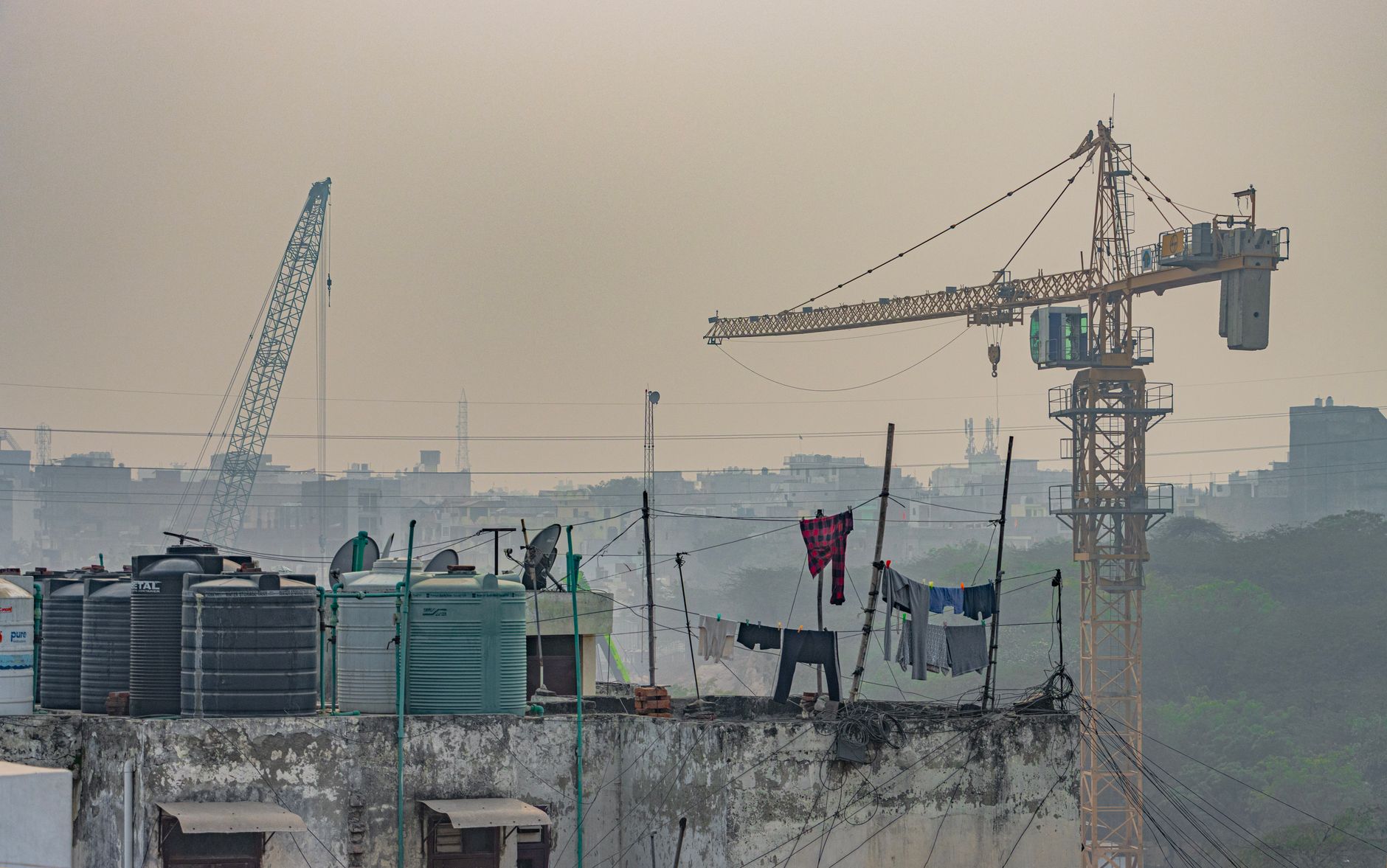
The national capital's air quality has reached a critical stage, with a significant number of monitoring stations recording toxic levels of pollutants. Ahead of Diwali, Delhi’s overall Air Quality Index (AQI) was recorded at 365. Data provided by the Central Pollution Control Board (CPCB) indicates that the air quality across the city is deteriorating rapidly, with 22 out of 59 monitoring stations reporting 'severe' air quality as of 7:30 am.
The CPCB classifies an AQI between 301 and 400 as 'very poor,' while levels between 401 and 500 are categorized as 'severe.' Several locations have already breached the 400 mark, including IIT Delhi, where the AQI touched 440. Other severely affected areas include Punjabi Bagh at 433, Vivek Vihar at 425, Mundka and Jahangirpuri both at 421, Rohini at 418, R K Puram at 414, Najafgarh and Sonia Vihar at 412, and Sirifort at 411. The remaining monitoring stations across the city currently fall within the 'very poor' category.
This sharp decline in air quality has prompted immediate intervention from the Commission for Air Quality Management (CAQM). On Friday, the commission imposed stage three measures under the Graded Response Action Plan (GRAP) for Delhi and the National Capital Region. GRAP is a series of emergency protocols designed to prevent further degradation of air quality when it hits specific thresholds. The implementation of stage three brings strict restrictions on construction and demolition activities known to generate dust and cause air pollution throughout the NCR.
In addition to construction bans, the Delhi government and other NCR state authorities are required to decide on measures regarding office attendance. Under these guidelines, public, municipal, and private offices may be directed to operate at 50 percent strength, with the remaining staff permitted to work from home to reduce congestion and emissions. These steps aim to manage the hazardous levels of particulate matter currently affecting the region.
According to projections from IITM-Pune, the air quality is expected to remain in the 'very poor' category on November 6, with conditions worsening to the 'severe' category between November 7 and November 9. The outlook for the six days following this period suggests that air quality will likely fluctuate between the 'severe' and 'very poor' categories, highlighting a prolonged period of environmental stress for city residents.
The India Meteorological Department (IMD) has provided a weather outlook for the coming days, noting that fog will likely play a significant role in the local climate. For November 7, the city is expected to witness shallow fog with a maximum temperature of 29°C and a minimum of 16°C. Humidity levels are projected to range between 65% and 85%. As the week progresses, moderate fog is anticipated starting November 9 through November 12, with temperatures generally hovering between 14°C and 28°C. Currently, no formal weather warnings have been issued by the department beyond these standard forecasts.
The persistence of these pollution levels remains a major concern, as the AQI showed a steady rise from 389 at 8 am to 391 at 9 am on Friday morning, confirming the ongoing deterioration of atmospheric conditions in the capital. Officials continue to monitor the situation closely as the city grapples with the impact of these high pollution levels.








Comments