


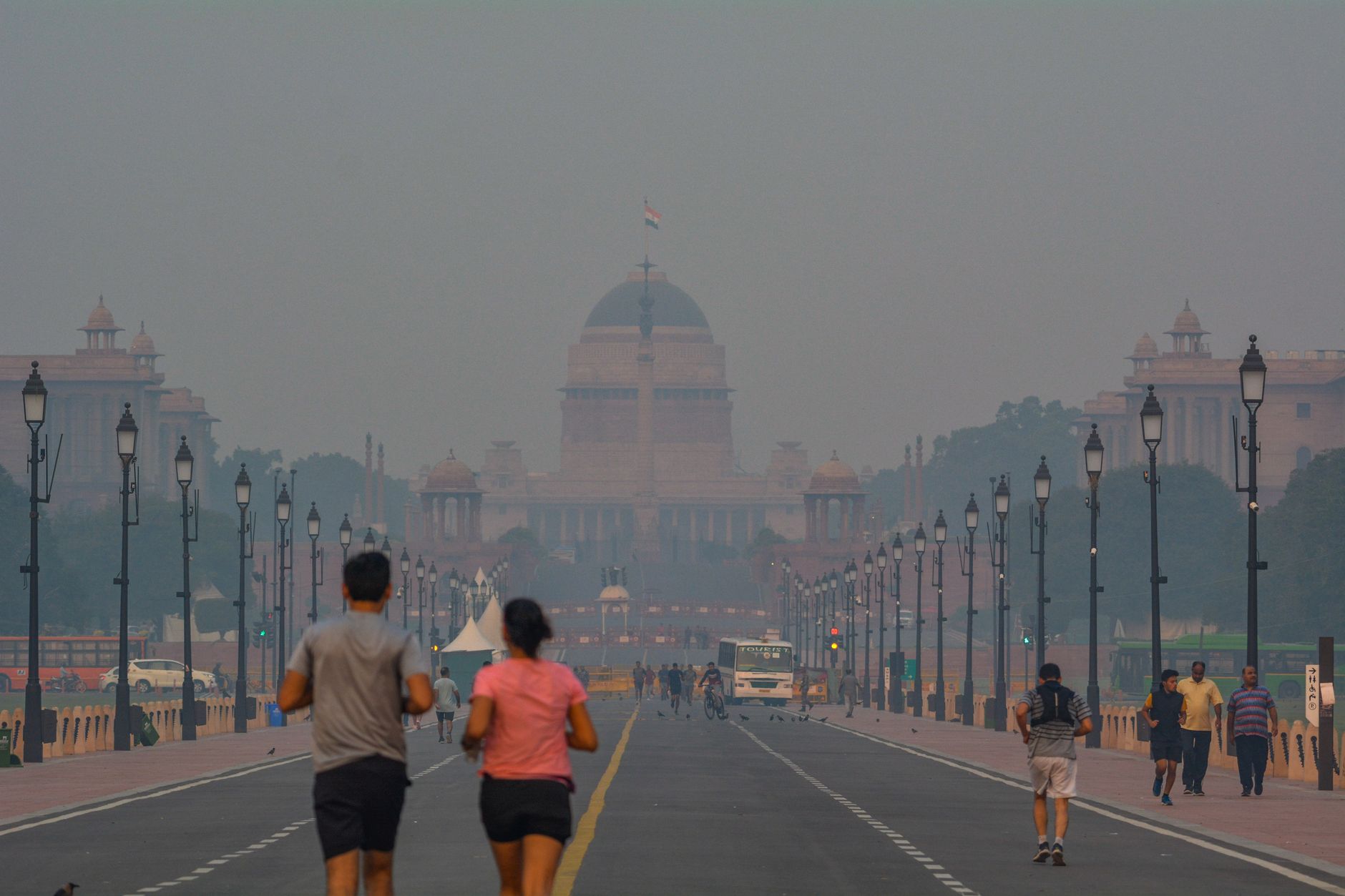
Air quality in the national capital has deteriorated significantly, with the Air Quality Index (AQI) nearing the 400-mark as a thick haze continues to envelope Delhi-NCR. According to data released by the Central Pollution Control Board (CPCB) on November 5, the AQI recorded in the vicinity of the iconic India Gate reached 399, falling into the 'very poor' classification. This alarming spike in pollution levels comes just days before the Diwali festival, exacerbating public health concerns across the region.
Visual reports from the Kartavya Path and India Gate areas depicted a city shrouded in dense smog, with monuments partially obscured by the heavy particulate matter. Despite the hazardous air conditions, morning visuals showed residents continuing with outdoor activities, including cycling and routine morning walks. In contrast, the air quality reading near Anand Vihar was recorded at 296, placing it in the 'poor' category according to the CPCB, highlighting the spatial variation in pollution intensity across the capital.
The current air crisis is part of a recurring seasonal pattern that impacts Delhi and the surrounding National Capital Region as winter approaches. As temperatures begin to drop—with the maximum expected to reach 31 degrees Celsius and the minimum around 18 degrees Celsius today—the trapped pollutants have led to a worsening of respiratory conditions. On November 4, the city recorded its poorest air quality in 288 days, with the 24-hour average AQI reaching 377 by the late afternoon, firmly within the 'very poor' range.
A significant factor identified in the worsening air quality is the continued practice of stubble burning in neighbouring states, particularly Punjab and Haryana. In response to the persistent non-compliance with environmental mandates, the Commission for Air Quality Management (CAQM) in the National Capital Region and Adjoining Areas took administrative action on November 4. The Commission issued formal show-cause notices to the deputy commissioners and senior superintendents of police in five Punjab districts: Jalandhar, Faridkot, Bathinda, Barnala, and Fazilka.
The notices were issued following the failure of these officials to effectively curb incidents of paddy stubble burning in their respective jurisdictions. This move aligns with broader governmental efforts to mitigate the annual winter pollution spike. Authorities have previously initiated several curbs, including the suspension of construction activities and potential work-from-home measures, to manage the deteriorating environmental situation from November 5 through November 20.
Meteorological data suggests that while the city will experience a mix of sunny and hazy conditions throughout the day, the lack of significant wind movement is likely to keep the pollution trapped in the lower atmosphere. The AQI scale categorises readings between 301 and 400 as 'very poor', while any figure exceeding 400 is classified as 'severe'. With the index hovering at the threshold of the severe category, the situation remains under close observation by environmental regulators.
As the region moves further into the winter season, residents are bracing for further fluctuations in air quality. Public health experts have consistently advised caution during these periods of high pollution, particularly for vulnerable populations, as the combination of declining temperatures and persistent agricultural burning continues to pose a challenge for administrative bodies and city planners tasked with maintaining air quality standards.








Comments