


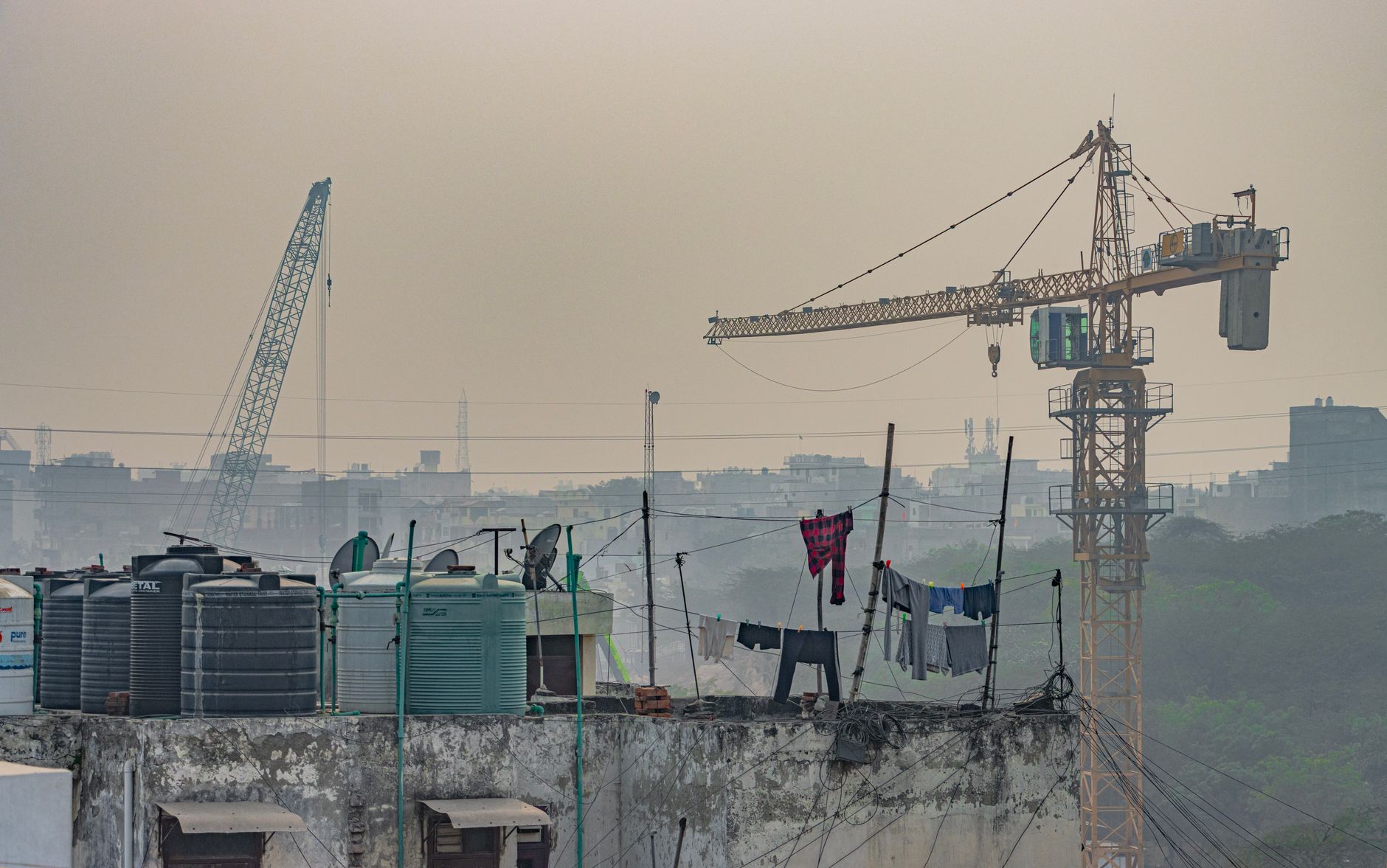
With the onset of winter and the anticipation of deteriorating air quality, the Centre has announced a stringent set of preventive measures for the Delhi-NCR region. Effective from November 5 to November 20, all construction and demolition activities across the capital and its surrounding districts are set to be suspended. This directive is part of a broader government strategy to curb emissions during the period when historical data indicates a significant peak in air pollution levels, often pushing the Air Quality Index (AQI) into the 'Severe' and 'Severe+' categories.
Alongside the construction ban, authorities have issued a work-from-home mandate for both government and private establishments. Offices located within the National Capital Territory (NCT) of Delhi, as well as the neighbouring districts of Gurugram, Faridabad, Sonipat, Ghaziabad, and Gautam Buddha Nagar, are required to operate with no more than 50 percent of their staff present on-site. The order specifies that this arrangement is intended to reduce fuel emissions associated with daily commuting, though it provides exemptions for essential services and industrial establishments where such remote work is not feasible.
The government has outlined specific exemptions to the construction ban to ensure that critical infrastructure development remains unaffected. Projects related to railways, metro services, airports, inter-state bus terminals, hospitals, and water supply and sanitation are permitted to continue. Furthermore, works classified as being of national importance, along with tasks related to national security and defence, are exempt from the suspension. Conversely, the directive explicitly clarifies that the restriction applies to linear public infrastructure projects, including highways, roads, flyovers, power transmission lines, pipelines, and telecommunication installations.
These policy decisions follow a period of fluctuating air quality in the region. While Delhi experienced several days of 'poor' air quality towards the end of October, there was a temporary improvement to the 'moderate' category on Friday, October 30. This brief respite was largely attributed to persistent rainfall caused by the influence of cyclone Arnab, which lowered local temperatures and helped clear the air. Despite this improvement, weather forecasts from the Air Quality Early Warning System suggest a return to 'poor' conditions beginning November 1, with a trend of further decline expected in the following week.
The enforcement of these measures is being coordinated across state lines to ensure a comprehensive impact. The Central Pollution Control Board (CPCB) has directed state pollution control boards in Delhi, Haryana, Uttar Pradesh, and Rajasthan to initiate immediate enforcement actions. Specifically, these bodies have been mandated to issue five-day show-cause notices for closure to any industrial units found in violation of environmental standards within the NCR.
Government officials emphasized that these proactive interventions are essential to minimize emissions before the arrival of peak pollution episodes. By mandating work-from-home policies and halting large-scale construction activity, the administration aims to mitigate the environmental impact of human activity during the cold weather months. The situation remains under close observation as authorities prepare to implement these restrictions starting next week, signalling a coordinated regional effort to address the recurring public health challenge of winter smog in northern India.








Comments