


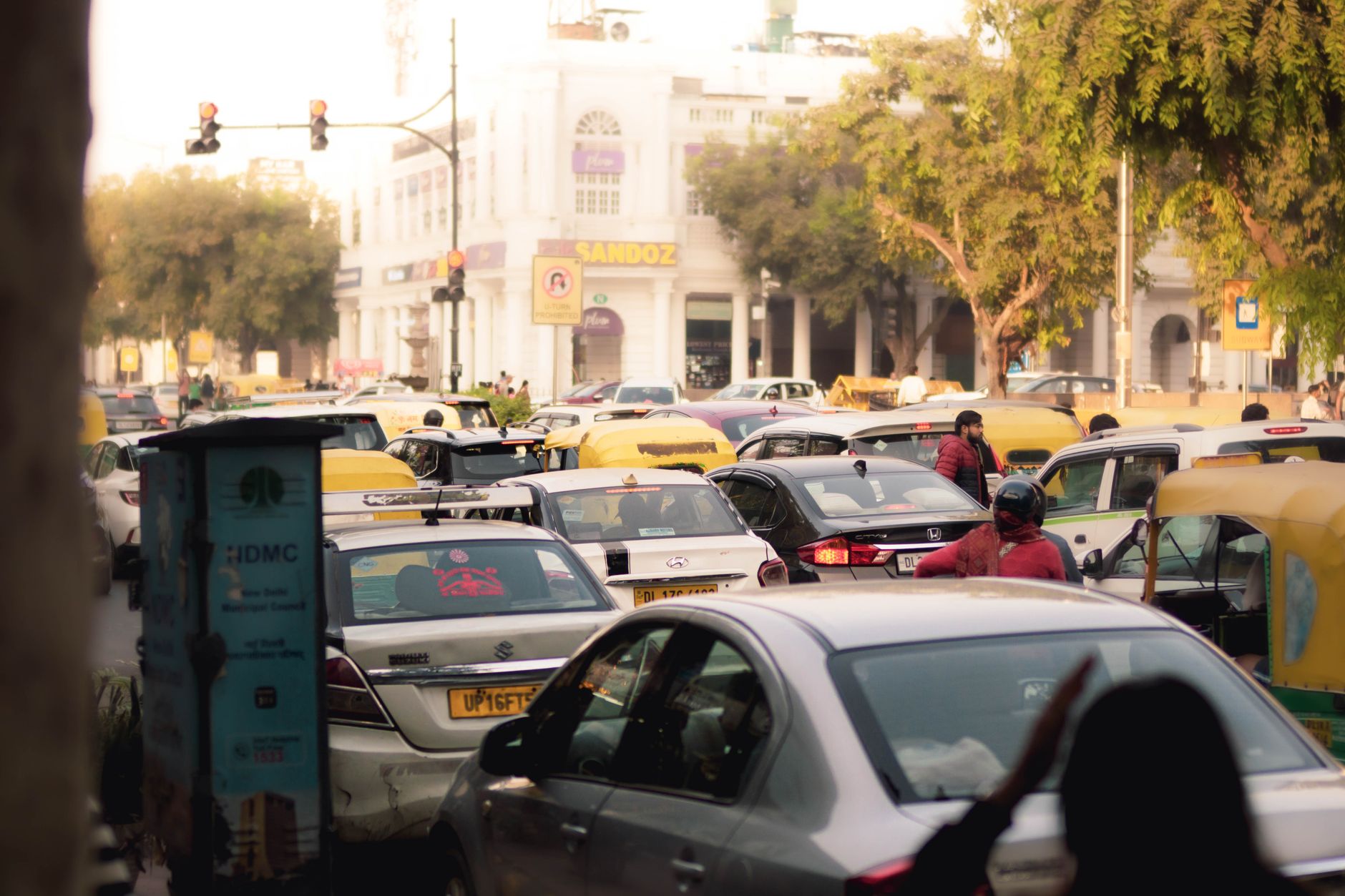
Delhi authorities have announced stringent restrictions on vehicular movement from neighbouring National Capital Region (NCR) districts, aimed at mitigating the city's seasonal air quality crisis. Starting November 1, 2026, and continuing until January 31, 2027, vehicles registered outside of Delhi that do not comply with the Bharat Stage 6 (BS6) emission standards will be prohibited from entering the national capital.
According to estimates provided by the transport department, this move is expected to impact more than 10 lakh vehicles across key bordering areas including Gurgaon, Faridabad, Noida, Greater Noida, and Ghaziabad. These administrative regions serve as major transit corridors for thousands of commuters traveling into Delhi daily, and officials have indicated that the ban is a necessary step in the government's winter pollution control strategy.
The impact of this policy is geographically broad. In the Haryana districts of Gurgaon and Faridabad combined, transport department officials have identified nearly 2 lakh vehicles that fall below the mandated BS6 threshold. Of these, approximately 70 percent are older BS3 and BS4 models. Furthermore, officials estimate that about 50,000 commercial vehicles in these two districts also fail to meet the current emission requirements, compounding the challenge for transport authorities tasked with enforcement.
The situation in the Uttar Pradesh sectors of the NCR is similarly significant. In Noida and Greater Noida alone, over 4 lakh vehicles fail to meet the BS6 standard, with BS4 petrol cars making up the majority of this figure. Ghaziabad faces a comparable challenge, with an additional 4 lakh vehicles identified as non-compliant. These figures underscore the scale of the transition required to align the regional vehicle fleet with the country’s most stringent current emission norms.
To ensure strict compliance with the new directives, Delhi authorities are deploying a comprehensive enforcement framework at border checkpoints. Officials confirmed that Automatic Number Plate Recognition (ANPR) cameras are being installed at strategic lanes and entry points to identify and log non-compliant vehicle registrations in real time. Beyond these technological interventions, the transport department has mobilised approximately 300 personnel to physically man these entry points and prevent non-BS6 vehicles from crossing into the capital.
The BS6 standard represents the latest iteration of India’s formal vehicle emission framework, which has evolved from the initial India 2000 norms through several stages including BS2, BS3, and BS4. The current policy aims to uphold the legally enforceable limits on air pollutants emitted by internal combustion engines. While the restrictions are rigorous, the Delhi government has clarified that electric and Compressed Natural Gas (CNG) vehicles are exempt from these bans, providing an alternative for those whose existing conventional vehicles no longer meet the entry criteria.
As Delhi prepares for the upcoming winter season—a period historically characterised by poor air quality and high pollution levels—the administration is focusing on these border measures to manage the influx of pollutants. Vehicle owners who commute regularly between the satellite cities and the capital are being advised to anticipate potential delays and check their registration compliance before travelling to avoid penalties or denial of entry at the border checkpoints.







Comments