


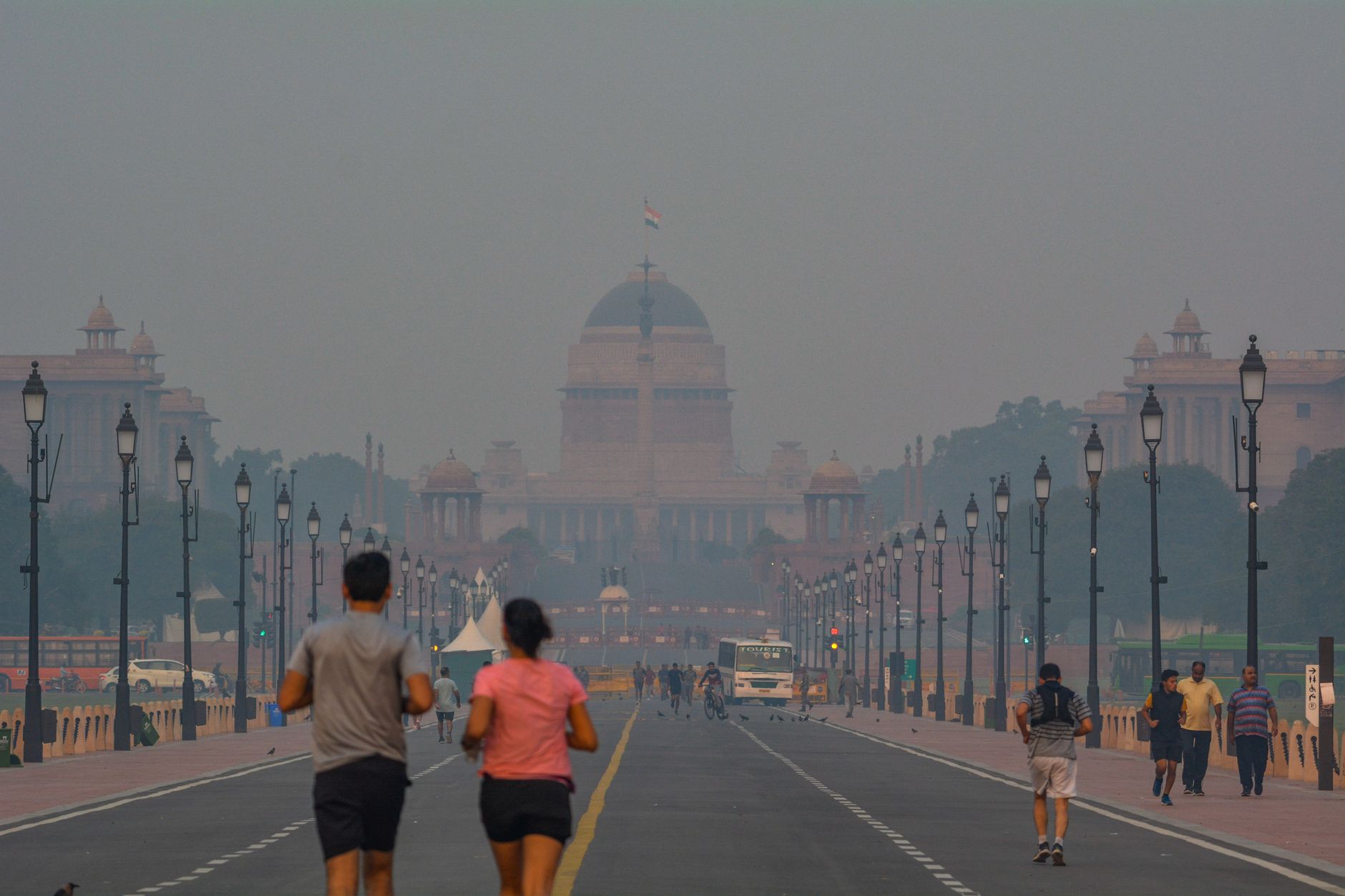
The Delhi government has unveiled its 10-point Winter Action Plan for the 2026-27 season, marking a significant escalation in its efforts to address the annual deterioration of air quality in the capital. Announced by Chief Minister Rekha Gupta, the comprehensive set of restrictions is scheduled to take effect from November 1 and will remain in force until February 28. The initiative involves a multi-agency coordination effort, including the Centre, the Commission for Air Quality Management, the Central Pollution Control Board, the Delhi Police, and the Delhi Metro Rail Corporation.
A core component of the new policy is the stringent regulation of vehicular traffic. From November 1, the administration will intensify its "No PUC, No Fuel" policy. Enforcement will be supported by 500 petrol pumps equipped with Automatic Number Plate Recognition (ANPR) systems. This mandate prohibits any vehicle lacking a valid Pollution Under Control Certificate from refueling, while also barring vehicles that have exceeded their official lifespan. Additionally, non-compliant petrol and diesel vehicles registered outside Delhi that do not meet Bharat Stage VI emission standards will face entry restrictions, though exemptions have been granted to electric and CNG vehicles.
To reduce peak-hour congestion and vehicular emissions, the plan introduces mandatory work-from-home arrangements. Government and private offices are required to ensure that 50% of their staff work remotely or implement a two-day work-from-home schedule per week. To further ease traffic strain, the government has introduced staggered office timings. Municipal corporation offices will now operate from 8:30 am to 5 pm, whereas Delhi government offices will function from 10 am to 6:30 pm.
The government is also targeting personal vehicle usage through economic disincentives. Parking fees at all authorized facilities in Delhi will be doubled, although facilities managed by the Delhi Metro will be exempt from this hike. Simultaneously, officials aim to bolster public transport, setting a target to increase daily ridership to 72 lakh for the Delhi Metro and 42 lakh for the Delhi Transport Corporation. The city currently operates a fleet of 6,840 buses, the majority of which are electric.
Construction activities, a major contributor to local dust pollution, will face rolling restrictions. A ban on dust-generating demolition and outdoor civil construction work will be in place from November 1 through January 31. A broader, total suspension of construction and demolition activity is scheduled from December 10 to January 20. To ensure compliance, all construction sites must maintain 100% CCTV coverage, and developers are now required to register via the government’s ‘Malba App’ to secure building-plan approvals.
Addressing the critical issue of road dust, the government has set a target to redevelop 3,000 km of roads. While 1,193 km have already been completed, the remaining work is slated for completion by mid-November. To mitigate accumulation, 98 mechanical road-sweeping machines have been deployed across two shifts. Furthermore, 37 identified pollution hotspots will undergo weekly inspections by nodal officers, including MLAs and councillors, to ensure adherence to control measures.
Industrial and waste management practices are also under heightened scrutiny. Following a survey of over 11,000 establishments, 2,283 polluting units have already been shut down or sealed. Authorities are now expanding this crackdown to include units operating without adequate emission controls in non-conforming areas. Concurrently, a "Zero Burning" campaign has been launched to eliminate the open burning of biomass and waste, rounding out the administration’s strategy to improve the capital's air quality throughout the harsh winter months.








Comments