


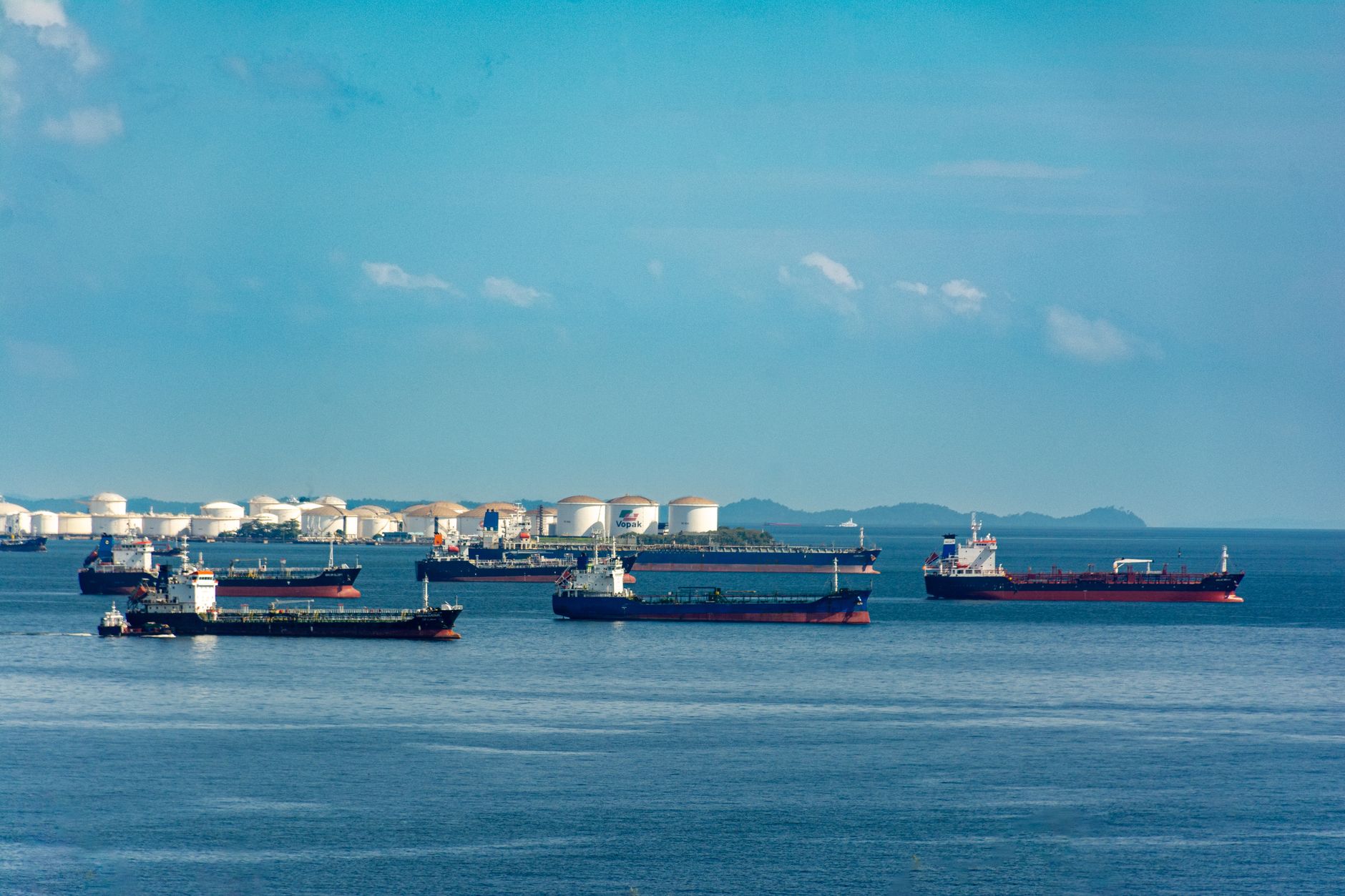
The Islamic Revolutionary Guard Corps (IRGC) declared on Saturday that it maintains full control over the Strait of Hormuz, a critical maritime corridor for global energy supplies. In an assertive statement, the IRGC indicated it would not permit U.S. military vessels to enter the Persian Gulf, challenging Washington’s continued presence in the region. Major General Ali Abdollahi, Chief of the General Staff of Iran's Armed Forces, stated that Iranian forces had rendered the U.S. Navy ineffective in the region, countering American claims that Iran's military capabilities have been compromised.
"The US president must only dream of their military and army entering the Persian Gulf again. They will take this wish to their graves," Abdollahi said, according to Iran’s state broadcaster Press TV. He reiterated that Iran would, under no circumstances, allow U.S. military vessels to transit through the Persian Gulf. During his remarks, Abdollahi also questioned the validity of repeated U.S. claims regarding the destruction of Iran’s nuclear facilities, labeling such assertions as a "delusion" intended to mislead public opinion.
These statements emerged as U.S. officials and political figures exchanged rhetoric regarding potential military escalations. U.S. Ambassador to Turkiye Tom Barrack suggested in an interview on Friday that a U.S. strike on Iran could occur over the weekend, though he noted that diplomatic efforts involving countries like Pakistan and Qatar remain ongoing. The issues under discussion include the status of the Strait of Hormuz, sanctions relief, uranium enrichment, and security guarantees.
President Donald Trump, when questioned about the possibility of an imminent strike upon his arrival in Florida, appeared to distance himself from the Ambassador’s remarks, stating he had no knowledge of such plans. However, at a subsequent election rally in Florida, the President warned that Washington might launch what he termed "another little Epic Fury" against Tehran if a diplomatic agreement is not reached.
In a separate development, the IRGC Navy claimed that two supertankers, carrying a combined total of more than 4.5 million barrels of crude oil, had struck naval mines while navigating an unauthorized southern route through the Strait of Hormuz. According to a statement carried by the Islamic Republic of Iran Broadcasting (IRIB), explosions and fires in the engine rooms forced the crews to abandon the vessels. These claims could not be independently verified, and no confirmation was immediately provided by ship operators or other international sources.
Despite the heightened tensions, the U.S. government maintains that its energy interests remain secure. U.S. Treasury Secretary Scott Bessent asserted on Friday that oil exports from the Persian Gulf have successfully surpassed pre-conflict levels. Writing on the platform X, Bessent stated, "Despite Iran’s efforts to disrupt energy shipments, oil exports from the Persian Gulf are roaring back and have surpassed pre-conflict levels," adding that Iran's threats have failed to halt the flow of energy to international markets.
The standoff underscores deep-seated uncertainty regarding maritime security in one of the world's most important shipping lanes. As both nations continue to assert conflicting narratives over military capability and regional influence, the prospects for a lasting diplomatic resolution remain fluid. The global community continues to monitor the situation, given the implications that any further disruption to shipping through the waterway would have on international trade and global energy costs.







Comments