


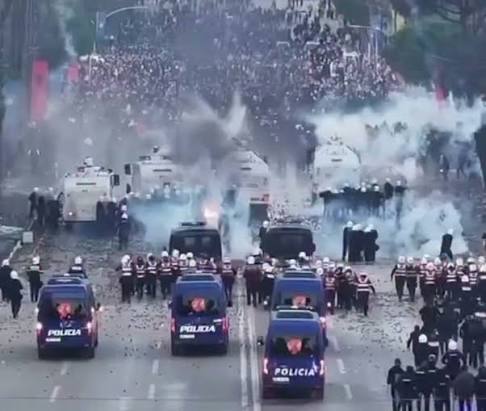
Tensions in Albania escalated on Thursday, October 22, 2026, as opposition lawmakers engaged in physical altercations on the floor of the parliament. The scuffle erupted after members of the opposition gathered in front of the speaker's podium, demanding an immediate halt to the legislative session in light of ongoing civil unrest in the capital, Tirana. During the confrontation, opposition MPs displayed images of a protester who was reportedly injured during recent clashes, while water and documents were thrown at the speaker's desk.
This week of unrest, which has seen protesters frequently clash with law enforcement and target government buildings, has resulted in more than 300 injuries, including those of numerous police officers. Dozens of demonstrators have been detained by authorities since the unrest began. The parliamentary session was intended to be a routine vote, but the opposition chose to leverage the chamber to amplify the grievances of the student movement that has been protesting against the administration of Prime Minister Edi Rama.
Sali Berisha, the leader of the Democratic Party and a long-time opposition figure, stated that the opposition decided to act as a voice for the protesters. In his statement, Berisha declared that the parliament could no longer function, asserting that it currently lacks legitimacy. In contrast, Socialist Party MP Pirro Vengu accused the opposition of opportunism, alleging on social media that these political groups are attempting to exploit the current instability as a vehicle to regain power.
The protests, which initially began in May, were sparked by a controversial resort development linked to the family of United States President Donald Trump. Over the months, however, the movement has expanded significantly, morphing into a broader public outcry against perceived corruption within the government. Protesters have consistently demanded the resignation of Prime Minister Rama, while simultaneously distancing themselves from established political parties, including those led by Berisha, whom they have also accused of corruption.
On Thursday, while the chaos unfolded inside the parliamentary chamber, several hundred protesters gathered outside the building. Despite the heightened emotions of the day, authorities reported that no major clashes occurred at the site during the session. This followed a relatively calm evening on Wednesday, October 21, when only minor, sporadic incidents were noted across the streets of Tirana.
The student-led movement appears to be preparing for a significant escalation in its campaign. Organizers have officially called for a national rally to take place on Saturday, October 24, which is expected to bring large numbers of demonstrators to the capital. While the protest movement remains focused on government accountability and educational support, the dramatic scenes in parliament reflect the deep political polarization currently gripping the Balkan nation.
Parliamentary disruptions are not without precedent in Albania, where the chamber has witnessed similar scenes in the past, including instances where flares were ignited inside the building. As the country approaches the planned national rally, the government faces sustained pressure both from the street and within its own legislative halls. The upcoming weekend is seen as a critical juncture for the protest movement as it seeks to maintain momentum against the backdrop of an increasingly fractured political landscape.








Comments