


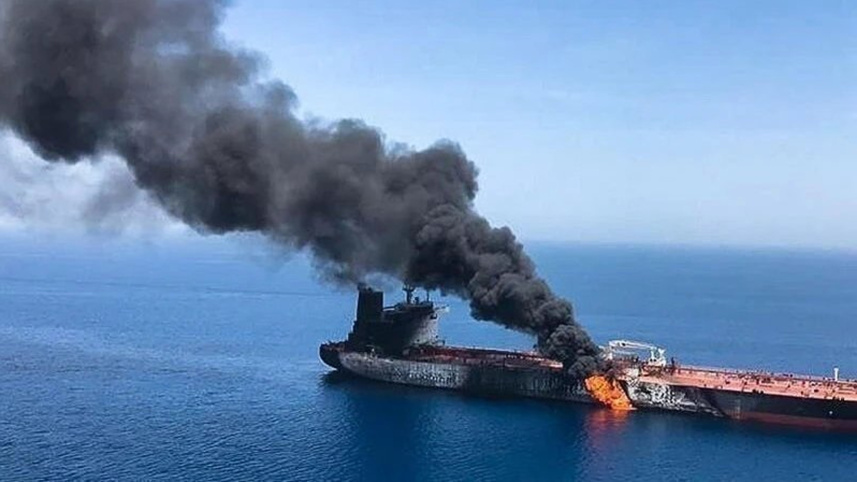
Iran’s Islamic Revolutionary Guard Corps (IRGC) reported on Saturday that two oil tankers have caught fire after striking naval mines in the Strait of Hormuz. According to the official IRNA news agency, each vessel was carrying approximately two million barrels of crude oil at the time of the incident. The IRGC stated that the first tanker suffered a fierce explosion upon impact, while the second was engulfed in a massive blaze after hitting a mine.
Authorities in Tehran alleged that both vessels had deactivated their radar and positioning systems in an attempt to traverse the waterway via routes not authorized by Iran. The IRGC further claimed that one of the tankers was attempting to transit the region with United States support, while the second vessel remained immobilized following the strike. Iran has maintained strict control over the Strait of Hormuz since the onset of the conflict in late February, requiring all transiting ships to obtain formal authorization.
This maritime incident follows warnings from IRGC naval commander Rear Admiral Ali Azmaei, who stated earlier in the week that any vessel found operating with deactivated navigation systems would be classified as hostile. The waterway, a critical artery for global energy supplies, previously facilitated the movement of roughly one-fifth of the world’s oil consumption. Current data from Kpler indicates a significant decline in throughput, falling from 20.8 million barrels on October 8 to 2.9 million barrels by October 11.
The broader context of these events remains tied to the ongoing diplomatic and military stalemate between Tehran and Washington. The United States has implemented a naval counter-blockade targeting Iranian oil exports, which has contributed to rising global energy prices and increased inflationary pressures. Maritime monitors, including the UK-based UKMTO, reported a surge in attacks near the waterway over the past fortnight, noting that six vessels were struck last Sunday alone.
In response to the tightening of international sanctions and the blockade of its ports, Iran has signaled an intensification of its maritime strikes. Reports from the Iranian army indicated that additional fires occurred on Thursday and Friday within what Tehran designates as a prohibited zone in the Gulf of Oman. Simultaneously, maritime security firms have observed multiple tankers being targeted in waters near Saudi Arabia, further complicating the transit landscape.
Amidst the growing instability, United States President Donald Trump addressed the situation in a recent interview with Newsmax. He ruled out the use of nuclear weaponry against Iran and stated that he is not currently considering the deployment of ground troops. President Trump expressed optimism that a resolution to the conflict could be negotiated following the upcoming United States midterm elections on November 3.
As of Saturday, specific details regarding the names of the affected tankers or the intended destination of their cargo remain unverified. International maritime agencies continue to monitor the situation, as the repeated targeting of vessels threatens to further disrupt global energy markets and heightens the risk of a wider regional confrontation. The incident underscores the fragility of commercial shipping routes as both sides maintain conflicting stances on the legitimacy of transit through the Strait of Hormuz.








Comments