


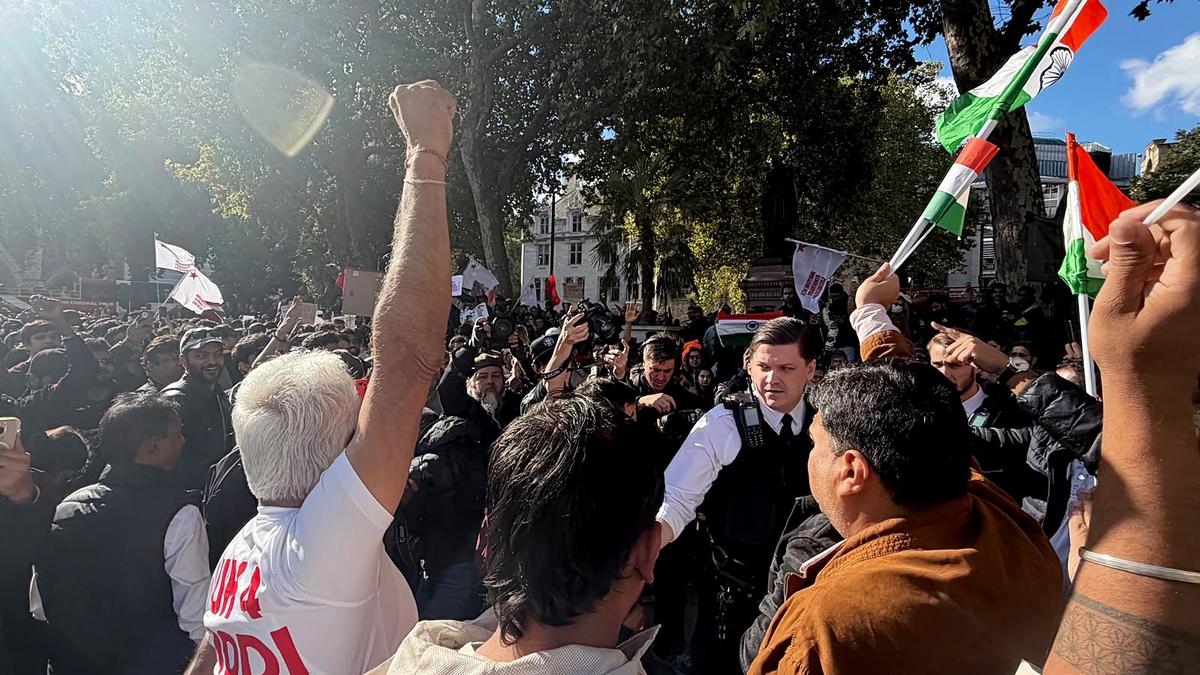
Hundreds of demonstrators gathered at Parliament Square in London on Saturday, October 17, 2026, marking a significant escalation in ongoing protests regarding the functioning of the Election Commission of India. The demonstration, which centered near the statue of Mahatma Gandhi, saw a confrontation between groups opposed to the current Chief Election Commissioner, Gyanesh Kumar, and those expressing support for the Indian government.
The primary protest, labeled as the “Stop Vote Chori” campaign, was organized by the Indian Overseas Congress Youth wing. The initiative received backing from several diaspora organizations, including the Students’ Federation of India (SFI) U.K., Save Democracy, and the South Asia Solidarity Group. The protesters expressed strong objections to the Special Intensive Revision (SIR) of electoral rolls currently being conducted in India. Activist Dhruv Rathee, who served as the keynote speaker, addressed the gathering, calling for a change in the leadership of the Election Commission.
Addressing the crowd in Hindi, Mr. Rathee stated, “It is important to spread the message against ‘vote chori’ in our country. These protests will stop the moment the Chief Election Commissioner is replaced by a candidate that is chosen in agreement between the government and Leader of the Opposition.” During the event, participants recited the Preamble of the Constitution of India and chanted slogans such as “Inquilab Zindabad” and “Vande Mataram” to voice their dissent.
In response to the demonstration, the India Diaspora (ID) U.K. issued an urgent call for a counter-protest. Supporters of the Indian government gathered across from the Gandhi statue, chanting “Modi, Modi” in a display of solidarity. Hirdesh Gupta, founder of the ID U.K., emphasized the group's position, stating, “The Indian diaspora in the U.K. stands firmly, shoulder to shoulder, with Modi Ji and his government in their vision of a strong, united and developed India.”
The Metropolitan Police were present at the scene to manage the situation and ensure that the two opposing factions remained separated. Reports indicated that the atmosphere became heated as both groups attempted to drown out the slogans of the other. The event followed a series of smaller gatherings, including a demonstration outside the High Commission of India in London on Friday, October 16, 2026, and an initial “Emergency Protest” held earlier that week.
The central point of contention remains the Special Intensive Revision (SIR) of electoral rolls. The protesters, who are also aligned with the demands of the Cockroach Janata Party (CJP), argue that the process lacks transparency. Conversely, the Election Commission of India has maintained that the exercise is a standard administrative procedure designed to update electoral rolls. According to the commission, the primary goal of the SIR is to identify and remove entries related to deceased individuals, duplicate registrations, and those who have shifted residences, ensuring the accuracy of the voter database.
As these demonstrations continue to play out in London, the divide between the opposing diaspora groups highlights the intense scrutiny surrounding India's electoral processes. While the protest organizers have vowed to continue their advocacy until their demands for changes within the Election Commission are met, supporters of the current administration maintain their firm backing of the government's policies. The presence of law enforcement and the intensity of the rhetoric on both sides underscore the sensitive nature of these ongoing debates within the Indian community in the United Kingdom.








Comments