


Environmental non-governmental organisation Green Visakha has formally demanded the immediate cancellation of all permissions granted for artificial intelligence (AI) data centre projects in Andhra Pradesh’s Visakhapatnam and Anakapalli districts. The group has also called for a total halt to construction activities currently underway at Tarluvada and Adavivaram, arguing that the projects have been greenlit without adhering to necessary legal and environmental protocols.
The pushback comes one year after the state government signed a memorandum of understanding (MoU) with Google on October 14, 2025, to develop an AI hub in the region. The project, which involves a $15 billion investment in collaboration with partner AdaniConneX, has become a focal point for local concerns regarding the sustainable use of natural resources. The NGO argues that the state government failed to conduct mandatory Environmental Impact Assessments (EIA) or hold public hearings, rendering the current approvals legally questionable.
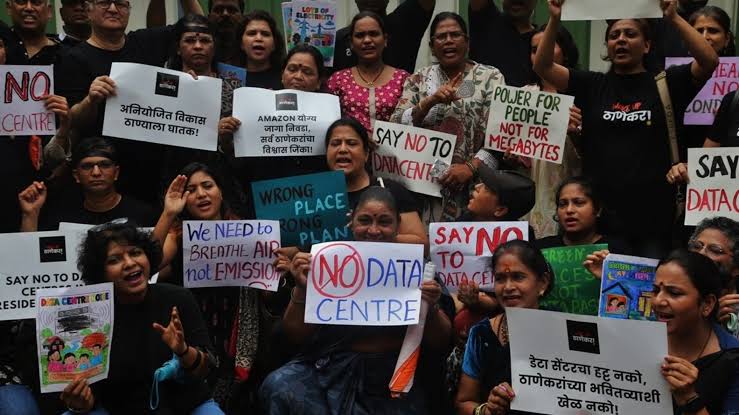
On Wednesday, approximately 200 protesters marched through Visakhapatnam, despite heavy rain, to mark the first anniversary of the MoU as a “Black Day for Vizag.” The demonstration, which saw participation from various groups including Climate Action, the Coalition for AI Regulation, and several student organisations, highlighted public anxiety regarding the sheer volume of electricity and water required to operate large-scale data centres. The protest concluded with a street play titled Datasura Vadhanam, which depicted the potential negative impact of such infrastructure on local land and water resources.
Central to the group’s demands is a request for the state government to issue a white paper detailing the specifics of the agreements. Green Visakha claims the authorities failed to follow the NITI Aayog’s Data Centre Evaluation Framework to Help States Plan for Sustainable Growth. Released on the same day as the protest, the NITI Aayog framework is intended to act as a decision-support tool for states to manage the expansion of data infrastructure without adding excessive regulatory layers, though the NGO contends that the local project has circumvented even the most basic evaluative measures.
Green Visakha treasurer G. Kantarao and secretary N. Chandra Shekhar have emphasised that the organisation intends to keep the issue at the forefront of public discourse. As part of their strategy, the group plans to approach candidates running in upcoming local body elections to solicit their specific positions on the data centre projects, effectively turning the environmental concerns into a central theme of the electoral debate.
The controversy underscores a growing national tension between the rapid expansion of AI infrastructure and the local environmental costs associated with such development. As data centres become increasingly critical to the global digital economy, they simultaneously place unprecedented demands on local power grids and water supplies. For now, the protesters are seeking transparency and a review of the permissions already granted to ensure that the infrastructure expansion aligns with sustainable growth and regulatory compliance.
Moving forward, the state government faces pressure to address the demands for greater transparency and to clarify the regulatory processes followed during the approval phase. While the project represents a significant investment in the state's technological future, the ongoing protest suggests that developers and policymakers will need to navigate heightened public scrutiny regarding resource allocation and environmental accountability in the months to come.








Comments