


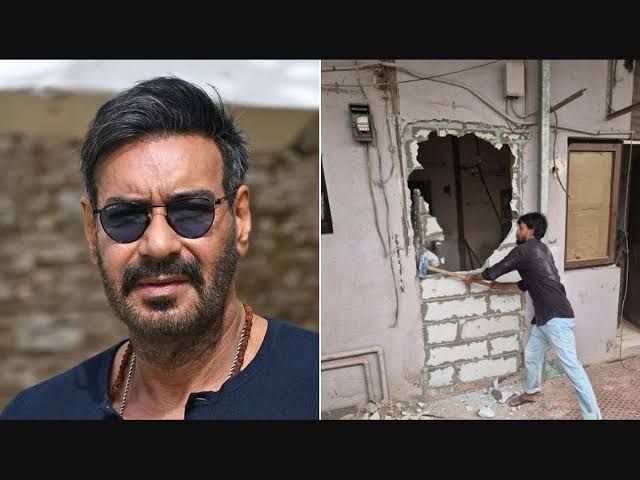
The Brihanmumbai Municipal Corporation (BMC) has carried out a demolition drive targeting interior construction work at the Juhu bungalow owned by actor Ajay Devgn. This municipal action comes in the wake of a stop-work notice that had been served to the property owner regarding alleged unauthorised alterations within the building. The bungalow is situated within the Kapole Co-operative Housing Society, a prominent residential area in Mumbai.
According to reports from civic officials, the municipal body had previously initiated a formal communication process, issuing a stop-work notice to address concerns over structural modifications being executed without the necessary permissions. These regulations are designed to ensure that all internal renovations or structural changes within residential properties adhere strictly to established municipal building codes and safety guidelines. The local authorities maintain that such adherence is mandatory for all property owners in the city, regardless of the status of the occupant.
Civic officials indicated that following the issuance of the notice, the representatives for the actor had formally requested an extension of four weeks to provide a response and address the allegations. However, the municipal corporation stated that it did not receive any communication or reply from the actor’s side within the specified timeframe. Consequently, the lack of a timely response led to the enforcement action taken by the civic body to dismantle the interior work that was deemed unauthorised.
This incident has drawn attention to the standard operating procedures of the BMC when property owners fail to comply with municipal directives. In Mumbai, the process for residential renovations typically requires prior approval, and the construction of internal spaces must conform to sanctioned plans. When alterations are found to deviate from these approved plans or are conducted without valid permits, the corporation is empowered to issue stop-work orders and, in cases of non-compliance, proceed with the physical removal of the unauthorised structures.
The demolition relates specifically to a portion of the interior work undertaken at the bungalow. While the exact scale of the alterations remains a subject of municipal documentation, the action highlights the ongoing challenges faced by city authorities in monitoring and regulating internal building projects. The case serves as a reminder of the regulatory framework that governs property modifications in densely populated urban areas like Juhu.
Beyond the immediate physical impact on the property, the situation underscores the friction that often arises between homeowners and civic authorities over building compliance. As the BMC continues to enforce municipal rules across Mumbai, such instances of demolition occur as part of a broader, consistent effort to maintain structural integrity and adherence to urban planning laws. The municipal body maintains that these regulations are in place to safeguard the interests of both individual residents and the collective safety of society members.
As of now, the demolition has been reported as a direct consequence of the unresolved compliance issue. Future developments will depend on whether the property owners decide to seek retroactive approvals or contest the civic body's findings through legal or administrative channels. For now, the structure remains under the scrutiny of the local municipal authorities, and further updates will likely depend on the communication between the actor's legal representatives and the BMC planning department regarding the restoration of the property in accordance with the law.








Comments