


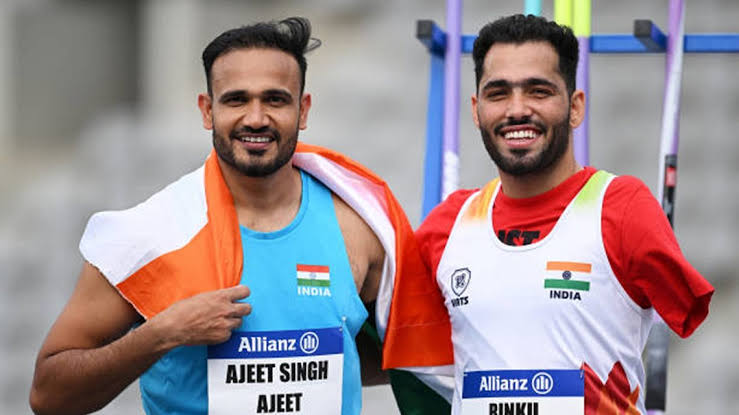
India is set to begin its campaign at the Aichi-Nagoya Asian Para Games this week, facing the dual challenge of a reduced squad size and ongoing internal disputes. While the country looks to build upon its historic fifth-place finish at the 2023 Hangzhou Games—where it secured a record 111 medals including 29 gold—the path to matching those figures appears significantly steeper this year. Competition in Nagoya officially opens on Sunday, though preliminary events in sports like para-badminton, para-table tennis, blind football, and boccia were already underway by Saturday.
The most immediate difference from the previous edition is the size of the Indian contingent. Due to tightened participation quotas and modifications to available events, India has sent approximately 168 athletes across 11 disciplines, down from 303 in China. Para-athletics, which provided the bulk of the medal haul in Hangzhou with 55 podium finishes, has seen its representation drop from 123 to 62 athletes, creating a noticeable gap in depth across track and field events.
Despite these logistical hurdles, the Indian team includes several established world-class performers. Paralympic champion and world-record holder Sumit Antil is set to lead the charge in the F64 javelin throw. Other notable competitors include high jumper Nishad Kumar, sprinter Preeti Pal, and club thrower Dharambir Singh. In the archery arena, armless archer Sheetal Devi, a two-time gold medallist in Hangzhou who has since earned an individual world title, remains a central figure. She is joined by Paralympic recurve champion Harvinder Singh and world champion Toman Kumar.
Para-badminton, another consistent source of success for India, sees a strong lineup led by flagbearer and former singles champion Pramod Bhagat, alongside Suhas LY and Paris Paralympics winner Nitesh Kumar. Meanwhile, the shooting squad is spearheaded by Paralympic champion Avani Lekhara, and Bhavina Patel, a silver medallist at the Tokyo Paralympics, anchors the table tennis team. These athletes carry the pressure of sustaining India's upward trajectory in international disability sports.
The lead-up to the Games has been complicated by governance disputes. In para-shooting, approximately 150 athletes formally represented their concerns to the Sports Authority of India, alleging financial irregularities and unfair selection practices. While the Paralympic Committee of India (PCI) president, Devendra Jhajharia, has dismissed these claims, insisting that selections were entirely merit-based, the tension persisted. The Ministry of Youth Affairs and Sports further unsettled the camp by removing the shooting team’s head coach shortly before the event, a move that drew criticism from several high-profile athletes.
Para-cycling has encountered its own selection challenges. Although a joint committee had recommended six cyclists, the sports ministry ultimately approved only Arshad Shaik to represent the country. The exclusion of the other five riders has sparked debate regarding selection benchmarks and the impact on the athletes' ability to accumulate crucial world ranking points ahead of the 2028 Los Angeles Paralympics. Currently, Shaik remains India’s sole representative in the cycling discipline.
With a smaller team and the weight of these administrative distractions, observers note that matching the 111-medal haul will be a difficult task. However, the focus remains on the quality of performance. A strong gold-medal count combined with consistent podium finishes across various disciplines could still result in a highly successful outing for the Indian contingent. Ultimately, much of the country's success will depend on how well the established veterans perform and whether the emerging talent can rise to the challenge on the continental stage.








Comments