


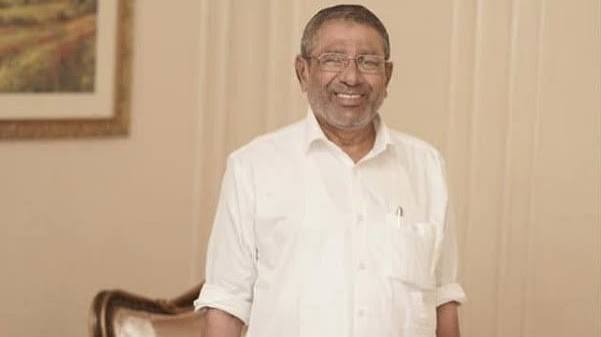
The Kerala government has officially reconstituted the State Waqf Board, appointing Indian Union Muslim League (IUML) leader M C Mayin Haji as its new chairman. The administrative order, issued on Friday, resulted in the immediate dissolution of the previous board, which had been established in March under the Left Democratic Front (LDF) administration. The move arrives less than seven months after the formation of the prior committee, which was led by K S Hamsa.
Despite the previous board having more than four years left in its mandated term, the state government moved forward with the restructuring, installing a new nine-member committee. According to officials, the incoming chairman, M C Mayin Haji, who serves as the state vice-president of the IUML, has prior experience in the role, having served as a board member in the past.
The newly appointed panel includes a diverse group of members, among them Kurukkoli Moideen, Musthafal Faizi, Siras D Capsi, Thodiyoor Muhammed Kunju Maulavi, Sajna Firoz, Jaseem Sabaha, Dr. Abdul Majeed, and Salahi Madina Begham. The reconstituted board is expected to convene for its inaugural meeting in the near future to address the administrative duties assigned to the body.
This development is set against a backdrop of legal uncertainty, as a petition filed by the outgoing chairman, K S Hamsa, challenging the government's decision to reconstitute the board, remains pending before the Kerala High Court. The timing of the change has drawn significant attention, particularly due to the notable omission of representatives from the A P Sunni faction, which is led by Kanthapuram A P Aboobacker Musliyar. Conversely, the new board includes members associated with the Mujahid faction, marking a shift in the composition of the governing body.
Beyond the internal restructuring, the state government has opted to delay the appointment of two non-Muslim members required under the amended Waqf Act. Officials indicated that these positions remain vacant pending a final judgment from the Supreme Court on matters related to the act. The administration of the board remains a sensitive subject in the state, compounded by broader, ongoing demonstrations across the region against the Centre’s proposed amendments to the national Waqf law.
The management and protection of Waqf properties have long been a subject of public and political discourse in Kerala, and the board plays a critical role in overseeing these assets. As the new committee prepares to assume its functions, stakeholders are closely watching how the transition will impact the board's operations, especially given the unresolved legal disputes surrounding its formation and the evolving national regulatory environment concerning Waqf properties.
Observers noted that the reconstitution reflects the ongoing complexities within state-level governance and the influence of various religious factions in the administration of Waqf affairs. With the court case still active, the stability of the new board may remain subject to future judicial review, even as the government signals its intent to press forward with its current leadership structure.







Comments