


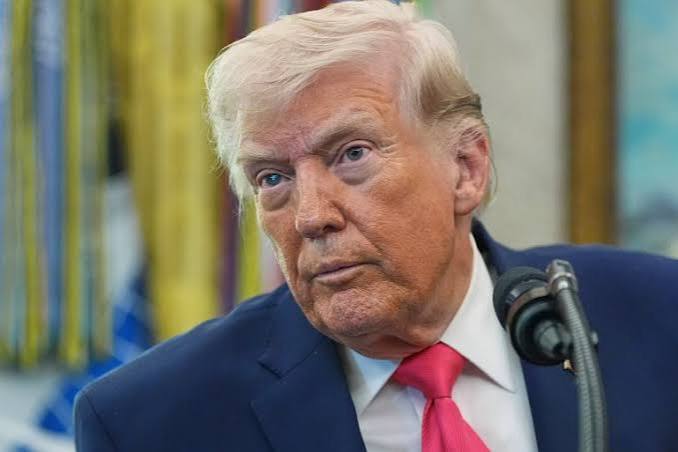
Former United States President Donald Trump sparked public discourse following recent remarks regarding the popularity of the name 'Mohammad' during a critique directed at Iran. The comments, which were made during a discussion concerning international relations and the current geopolitical stance toward the Middle Eastern nation, drew immediate attention to the cultural and religious significance of the name within Islamic communities globally.
The name 'Mohammad' is widely recognized as one of the most common male names among Muslims worldwide. It is deeply rooted in the Islamic tradition, where parents frequently choose to name their sons after the Prophet Mohammad, the founder of Islam, as a mark of reverence and faith. Because of this widespread practice of honoring the central figure of the religion, the name appears with great frequency across diverse cultures, ranging from the Middle East and North Africa to Southeast Asia and diaspora populations in the West.
During his commentary, the former president alluded to the prevalence of the name while framing his critique of Iranian leadership and regional policy. Observers noted that the invocation of such a deeply personal and sacred name in a political context often serves to highlight the intensity of the rhetoric currently surrounding U.S.-Iran relations. The use of specific cultural identifiers in political discourse is a tactic sometimes employed to underscore arguments related to national identity, foreign policy, or demographic shifts, though it frequently invites scrutiny regarding the sensitivity of religious traditions.
The backdrop of these remarks is a long-standing and complex history of diplomatic friction between Washington and Tehran. For years, the two nations have navigated a series of escalations, ranging from nuclear policy disagreements to regional military maneuvers. Within this environment, political figures often resort to sharp rhetoric to define their positions for domestic audiences, frequently drawing on broader cultural themes to emphasize their perceived differences with opposing states.
Sociologists and cultural analysts often point out that the global ubiquity of the name 'Mohammad' is a testament to the expansion and endurance of Islamic culture over fourteen centuries. Because it is a name that transcends national borders, its mention in a public political forum inevitably triggers conversations about how foreign entities are perceived by Western leaders and the general public. While the specific intent of the former president’s joke remains a subject of interpretation, it serves as another example of how religious and cultural markers are increasingly integrated into the mainstream American political narrative.
The timing of these comments comes as global observers monitor the evolving policies of various American political figures ahead of future administrative cycles. As the United States continues to grapple with its involvement in international conflicts and alliances, the language used by prominent leaders remains a critical area of focus for international diplomats and human rights organizations alike. The impact of such statements is often felt beyond the immediate political sphere, reaching communities who view the casual use of religious symbols as a matter of cultural respect and public discourse standards.
Looking ahead, the role of rhetoric in shaping international perceptions will likely remain a contentious issue. Experts suggest that as geopolitical tensions remain high, the choice of words by influential leaders will continue to be evaluated through the lens of both domestic political strategy and international diplomacy. Whether such comments serve to galvanize a political base or alienate international partners remains a point of constant debate among political scientists and media analysts who monitor the intersection of personality-driven politics and global statecraft.







Comments