


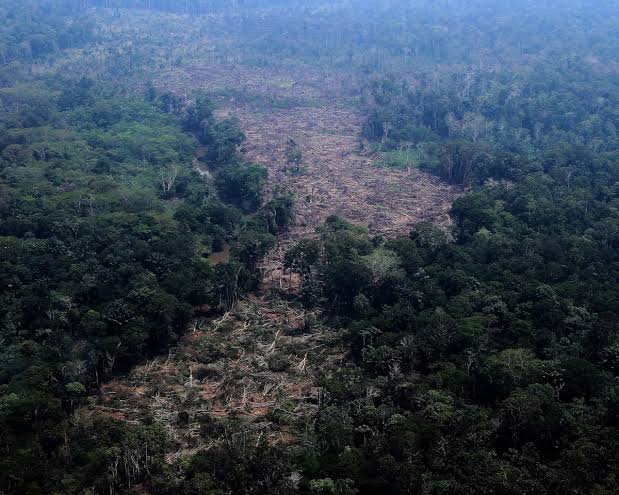
The Brazilian government has announced a significant decline in deforestation rates across the Amazon and the Cerrado savanna, reaching record lows just ahead of a highly contested presidential run-off election. Satellite data covering the year leading up to July 2026 shows a 41.8% reduction in Amazon deforestation, representing the largest drop since the country began tracking such data in 1988. Furthermore, the Cerrado region saw a 23.8% decrease in forest loss during the same period.
The preservation of the Amazon remains a central theme in the upcoming 25 October election, where incumbent left-wing President Luiz Inácio Lula da Silva is set to face Flavio Bolsonaro, the son of former president Jair Bolsonaro. While current polling indicates a tight race, the contrast in environmental policy between the two sides has heightened public interest in the future of the rainforest. Flavio Bolsonaro is expected to maintain his father's previous policy stances if elected, though he has specifically committed to addressing organized crime within the Amazon basin.
President Lula, who took office three years ago, has consistently championed a goal to eliminate all illegal deforestation by 2030. Upon his inauguration, he moved to reverse the policies enacted by his predecessor, Jair Bolsonaro. Under the previous administration, which ran from 2019 to 2022, forest clearance rates surged as the government encouraged mining activities on indigenous lands and reduced resources dedicated to environmental enforcement. Official data indicates that the Amazon lost nearly 60% more forest cover during those four years compared to the preceding period.
In response to these environmental challenges, the current government tightened monitoring systems and increased penalties for illegal logging operations. Reflecting on the new data, Brazil's Environment Minister, Joao Paulo Capobianco, described the reduction in deforestation as an "absolutely stratospheric" achievement for the nation. The findings have also drawn praise from climate advocacy groups. Marcio Astrini, executive secretary of the organization Observatorio do Clima, characterized the results as a historic milestone that demonstrates how political commitment can successfully reduce both deforestation and greenhouse gas emissions.
The Amazon rainforest serves as the world's largest tropical forest and acts as a critical natural buffer in the global effort to mitigate climate change. Approximately 60% of this vast ecosystem is located within Brazilian borders. Beyond its role in carbon sequestration, the region hosts millions of unique plant and animal species. However, for decades, the forest has faced immense pressure from deliberate land clearing for agriculture and commercial logging, as well as the increasing threat of climate change, which scientists warn can create conditions conducive to severe wildfires.
As the country approaches the run-off, the success of these environmental initiatives remains a focal point for voters and international observers alike. President Lula reaffirmed his commitment to the 2030 target in a statement posted to X this past Friday. Whether these trends will influence the final outcome at the ballot box on 25 October remains to be seen, as both the electorate and environmental experts weigh the long-term implications of Brazil's current conservation trajectory.








Comments