


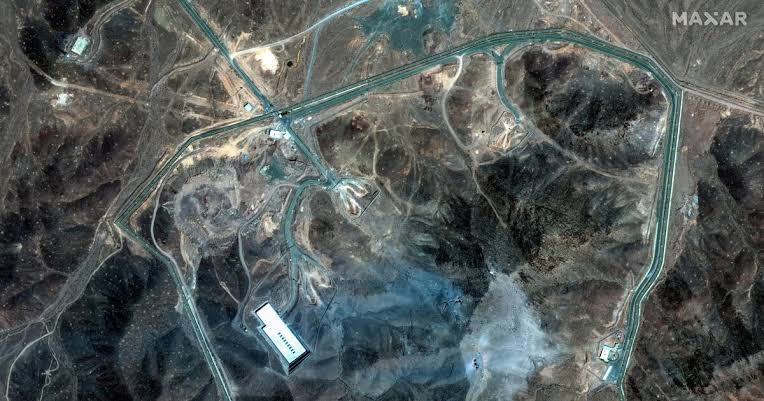
Amid a lull in active hostilities between the United States and Iran, President Donald Trump has suggested that Washington is weighing further military strikes against Iranian nuclear infrastructure. In an interview with Newsmax, the President specifically identified "Pickaxe Mountain," a heavily fortified site believed to house nuclear programme components, as a potential target. Trump expressed confidence in the precision of such an operation, remarking, "We'll take a shot at that one. We'll knock it out fast."
When questioned regarding the potential scope of such an engagement, the President firmly dismissed the deployment of ground troops. "No, I don't see that. I don't see that," Trump stated, clarifying that any future military action would likely rely on aerial capabilities rather than a land-based invasion. This position aligns with previous administration strategies that have favoured targeted strikes and economic sanctions over traditional occupation tactics.
The discussion surrounding potential military escalation follows reports that the Pentagon has developed strike plans for use should the President order a resumption of active combat. Central to these discussions is the GBU-43/B Massive Ordnance Air Blast, frequently referred to as the "mother of all bombs" (MOAB). Trump clarified that while the weapon is exceptionally powerful, it is not nuclear. He described it as "just an extremely large bomb," noting that its destructive capacity is significant despite it not being a nuclear device.
Regarding the timeline of the conflict, President Trump predicted that the situation would resolve shortly. He emphasised that the US remains engaged in negotiations, though he left the door open for continued military pressure to ensure that Iran never acquires a nuclear weapon. He argued that withdrawing from the region prematurely could necessitate a repeat of current military operations within a year. "We want to make it so that they will never have a nuclear weapon, because if they had it, they would use it, in my opinion, instantaneously," he added.
The current state of the conflict has been described as an uncertain phase transitioning between active war and a temporary ceasefire. In September, the President reportedly rejected a proposal from Tehran for a seven-day truce linked to the reopening of the Strait of Hormuz. Following that rejection, officials indicated that the administration was preparing for the possibility of renewed bombing campaigns, potentially following the conclusion of the 3 November midterm elections.
The prospect of further escalation is being closely monitored by observers who note that the President’s approach has frequently shifted between diplomatic overtures, intense military action, and the imposition of severe economic sanctions. While the administration claims significant damage has already been inflicted on Iran's nuclear infrastructure, the potential use of the MOAB signals a move toward high-intensity tactical strikes against deep-buried targets.
As the conflict continues, the administration maintains that its primary objective is the permanent neutralisation of Iran's nuclear potential. Trump asserted that regardless of the specific method—whether through diplomatic engagement or military intervention—the war is expected to conclude soon, which he suggested would have positive implications for the global economy, specifically regarding oil and gas prices.







Comments