


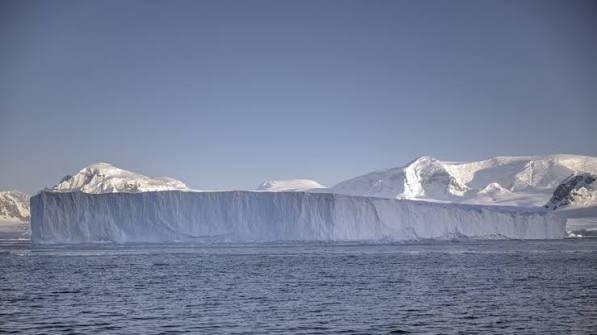
The Thwaites Glacier, widely referred to as the “Doomsday Glacier” due to its critical role in global sea-level stability, is melting at a more aggressive pace than scientists had previously projected. New research published in the journal Nature Communications suggests that the impact of this massive West Antarctic ice formation on sea levels could be significantly higher than earlier estimates, potentially doubling previous forecasts by the end of the century.
Glaciologists from the University of California, Irvine, and NASA’s Jet Propulsion Laboratory collaborated on the study, utilizing a sophisticated new ice sheet model to examine the complex mechanics occurring beneath the glacier. By incorporating a "grounding zone" into their analysis—an area previously treated as fixed in traditional models—the researchers gained deeper insight into the interactions between the glacier and the warming ocean. The team found that the glacier could contribute as much as 1.2 inches to global sea levels by 2100, an amount that could occur independently of further global warming.
The Thwaites Glacier is situated in one of the most inaccessible regions on the planet, with a surface area comparable to the size of Florida. For decades, the glacier has been in a state of retreat, and its discharge currently accounts for approximately 4 percent of annual global sea-level rise. Due to the extreme complexity of the environmental factors driving this retreat, mapping the future of the glacier has proven to be a formidable challenge for the international scientific community.
At the heart of this rapid melting is the "grounding line," the crucial point where a glacier transitions from resting on the seabed to floating on the ocean as an ice shelf. The new study highlights that this is not a static line, but rather a dynamic "grounding zone" that can span several miles in width. Lead author Mattia Poinelli, who conducted the research while at UC Irvine, noted that this arrangement allows for "tidal pumping," where seawater is forced under the ice sheet by the tides. This process exposes the underside of the glacier to relatively warm ocean water, resulting in vigorous melting.
The internal topography of the region further complicates the glacier's stability. The land beneath Thwaites slopes downward, meaning that as the ice retreats, it exposes larger volumes of ice to the warmer seawater. Currently, two underwater ridges act as natural buffers, holding the ice back and preventing it from flowing into the ocean at a higher velocity. However, the study indicates that these defensive structures may be failing.
The researchers observed that the glacier is slowly detaching from one of these key structures, known as the Mouginot Ridge. Estimates suggest there is a 60 percent probability that the ice will break free from this ridge before the close of the century. Should this detachment occur, the glacier could begin a rapid retreat down the sloping terrain toward the next major ridge, significantly accelerating the loss of ice.
The implications of these findings are substantial. Thwaites Glacier holds enough ice to potentially raise global sea levels by more than two feet in the event of a total collapse. Beyond its own mass, the glacier serves a secondary role as a natural dam, obstructing the flow of surrounding ice sheets into the ocean. As the scientific community continues to refine its understanding of the "Doomsday Glacier," these findings underscore the volatile and unpredictable nature of Antarctic ice dynamics in a changing climate.








Comments