


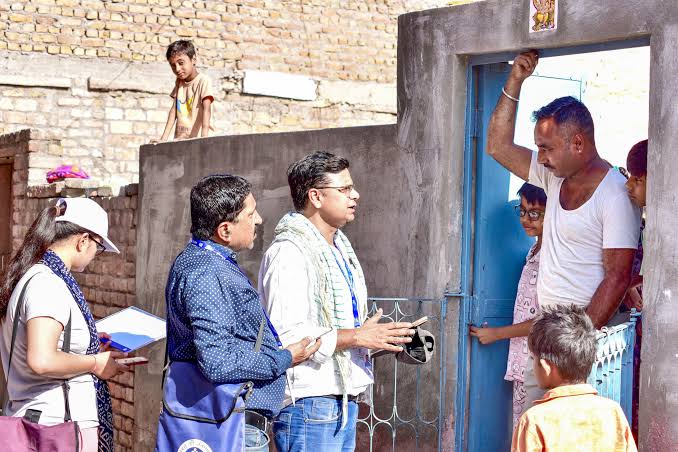
The Union Home Ministry has taken a significant step toward broadening the administrative workforce for the upcoming national Census by amending the existing regulatory framework. In a notification issued this past Friday, the ministry announced that the pool of eligible enumerators has been expanded to include teachers from private, aided, and unaided institutions, as well as personnel from public sector undertakings, banks, and various statutory bodies.
This policy shift, formalised through the Census (Amendment) Rules, 2026, revises Rule 3 of the original 1990 guidelines. Previously, the definition of individuals eligible for appointment as enumerators was relatively narrow, primarily focusing on government school teachers and civil servants. The new amendments provide a more comprehensive classification, categorising potential staff into three distinct groups. This move is designed to ensure a sufficient number of trained personnel are available to handle the complex logistical demands of the 2027 Census exercise.
Under the revised rules, the eligibility criteria now encompass teachers employed by any educational institution under a government authority, local authority, or private body, including societies and trusts. Furthermore, the role is now open to clerks and officials from a wide array of organizations, including public sector undertakings (PSUs), banks, companies, and various statutory institutions. Additionally, the updated mandate empowers state governments and Union territory administrations to appoint any other individual they deem suitable for performing the duties of an enumerator.
The administrative expansion comes as the government prepares for the second phase of the Census, which is slated to begin in five poll-bound states this November. Following this initial phase, the exercise is scheduled to extend to the remaining states in February of next year. The collection of data in some regions, such as Ladakh and specific mountainous parts of Uttarakhand, Himachal Pradesh, and Jammu and Kashmir, has already been completed due to the challenges posed by their unique climate and terrain.
The inclusion of a wider range of staff is considered vital for the upcoming cycle, as the 2027 Census will mark a significant shift in data collection. For the first time since 1931, the census questionnaire is set to record caste-related information alongside standard demographic data. Officials expect that by widening the talent pool to include qualified staff from diverse sectors, the government will be better positioned to ensure the accuracy and reliability of the responses collected during the population enumeration process.
By providing more clarity on the classes of officials and staff who can be tasked with census duties, the government aims to streamline the engagement process. The ability to draw from both the private and public sectors allows local administrations to mobilize human resources more effectively, particularly in urban areas where a vast workforce from the banking and private educational sectors is readily available.
As the country prepares for this massive administrative undertaking, the amended rules provide the necessary legal backing to deploy this diverse workforce across the nation. The successful execution of the census remains a priority for the central government, and the expansion of the enumerator pool is viewed as a strategic decision to ensure that the enumeration process is both thorough and efficient in its coverage of the population.








Comments