


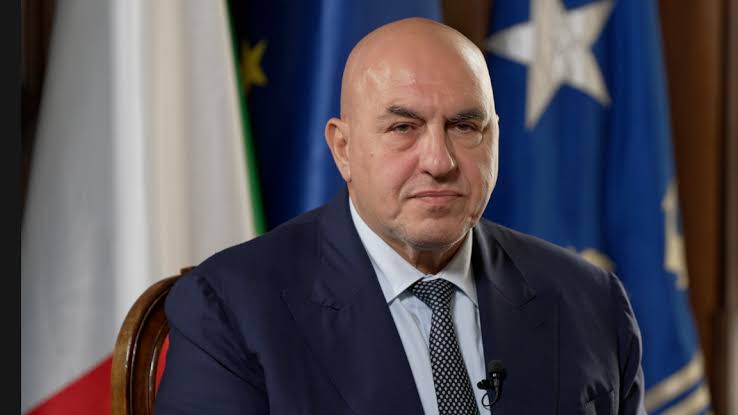
Italy’s Defence Minister, Guido Crosetto, has sharply criticised moves by the United States to limit access to essential satellite systems and intelligence shared with Ukraine. Describing the restriction of such support as a significant error, Crosetto told the BBC that providing fewer resources to Kyiv undermines efforts to reach a diplomatic resolution, potentially prolonging the full-scale invasion launched by Russia.
The minister emphasised that the objective of supporting Ukraine is to force Russia to realise that a military stalemate exists. According to Crosetto, any perception of weakness on the Ukrainian side, fostered by a reduction in Western backing, serves only to embolden Russian President Vladimir Putin. He maintained that showing resolve is the only way to convince the Kremlin that territorial advancement is no longer feasible, warning that diminishing resources will likely cause the war to continue.
Tensions between the Italian government and the incoming US administration have surfaced in recent days. Prime Minister Giorgia Meloni has openly questioned a deal involving the purchase of diesel from Russia, which she labelled a high-risk choice that could grant legitimacy to Moscow while it continues to target Ukrainian infrastructure. Meloni argued that such economic decisions directly contradict broader efforts to bring Russia to the negotiating table.
Domestically, the Italian administration faces increasing pressure regarding its continued support for Ukraine. While the government remains committed to providing aid, public opinion polls consistently indicate low levels of support for sending military supplies. A September survey conducted by the Ixè institute suggested that only 18% of Italians favour the continued delivery of weapons. This sentiment is further complicated by rising energy costs and economic strain, which have triggered protests by students and transport workers across the country.
Crosetto acknowledged the difficulty of justifying continued support for Ukraine to citizens grappling with high fuel prices. He alleged that Moscow is engaging in an active disinformation campaign designed to sway public opinion and weaken the political stance against Russia. Despite these challenges, the defence minister reaffirmed that Italy intends to maintain its support for as long as the current government remains in office. However, he noted that future parliamentary approvals for military aid could become more complicated as national elections approach, with the term concluding by 2027.
The minister also highlighted the broader security environment in Europe, noting that cyber-attacks linked to Russia have become a routine occurrence, with hundreds reported daily. He expressed concern that Europe’s response to these threats has been insufficient. Addressing concerns about potential physical sabotage, such as a fire at an arms depot near Rome in August, Crosetto attributed the incident to human error rather than malicious activity. He also stated that reports suggesting Russia planned drone attacks against Mediterranean nations remained unproven.
Throughout the interview, Crosetto maintained a firm stance on the nature of the conflict. He described the invasion of a sovereign state, the targeting of civilians, and the destruction of power plants as inherently evil. As Italy navigates the political complexities of its coalition and domestic economic grievances, the government continues to signal that, despite the risks and internal opposition, it views unwavering support for Ukraine as essential to the continent's future security.








Comments