


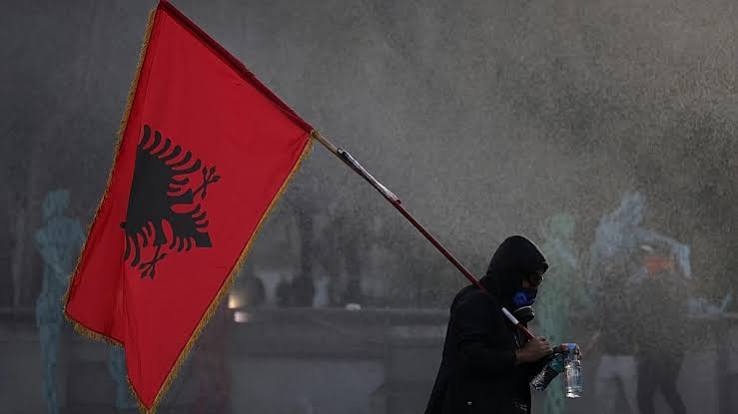
Albanian Prime Minister Edi Rama has publicly attributed the recent wave of violent student-led demonstrations to the influence of “foreign hands,” dismissing claims that the unrest stems from legitimate domestic grievances. In a video address delivered on Friday, the Prime Minister rejected the notion that the protests reflect genuine student concerns, asserting that external forces are working to destabilize the country and prevent Albania from maintaining internal peace.
The statements from the Prime Minister follow four days of intense confrontations between demonstrators and riot police in the capital, Tirana. What began as an education-focused movement has evolved into a broader protest against the government, with thousands of young citizens marching to demand Mr. Rama’s immediate resignation. The situation escalated on Friday as protesters gathered outside the education ministry, with police responding to the hurling of rocks by deploying water cannons and tear gas.
The unrest, which has recently intensified, has now spread significantly beyond the capital city. Local media reports indicate that protesters in cities such as Elbasan, Shkodra, and Korca have engaged in acts of property damage, including breaking windows and setting fire to rubbish bins. Government infrastructure has been a primary target, with protesters attacking the finance and justice ministry buildings, the prime minister’s office, and various bank branches. Police authorities confirmed that 160 individuals were detained on Thursday evening in connection with the escalating violence.
These protests follow several months of largely peaceful demonstrations. The initial catalyst for the civil unrest was linked to the sale of a portion of Albania’s coastline for a luxury resort development project involving Jared Kushner, the son-in-law of United States President Donald Trump. As the movement has grown, demonstrators have expanded their list of demands to include comprehensive electoral and education reforms, alongside a persistent call for the Prime Minister to step down.
Prime Minister Rama, whose government has consistently denied allegations of corruption, indicated he is willing to engage in dialogue regarding the rising costs of higher education. However, he remains steadfast in his refusal to resign. During a statement on Thursday, he emphasized that his primary responsibility is to address legitimate concerns while ensuring the nation continues its progress. He further suggested that his departure would constitute a betrayal of the electoral mandate he received to lead the country toward European Union membership.
Albania’s ambition to join the European Union remains a central plank of Mr. Rama’s political agenda. Having secured a fourth term last year, he has set a target for EU accession as early as 2028. Nonetheless, the country’s progress in this area has been complicated by various corruption scandals. Independent analysts have frequently pointed to the country’s challenges with organized crime, noting that the nation has become a significant hub for gangs involved in drug and weapons trafficking, as well as money laundering.
As the protests continue, the divide between the government’s narrative of foreign subversion and the demonstrators' demands for structural reform remains deep. While the Prime Minister attempts to frame the unrest as an external conspiracy, the movement continues to reflect deep-seated frustrations among the youth regarding governance, academic conditions, and the nation’s long-term institutional health. The immediate future of the protests remains uncertain as authorities maintain a heavy security presence in urban centers across the country.








Comments