


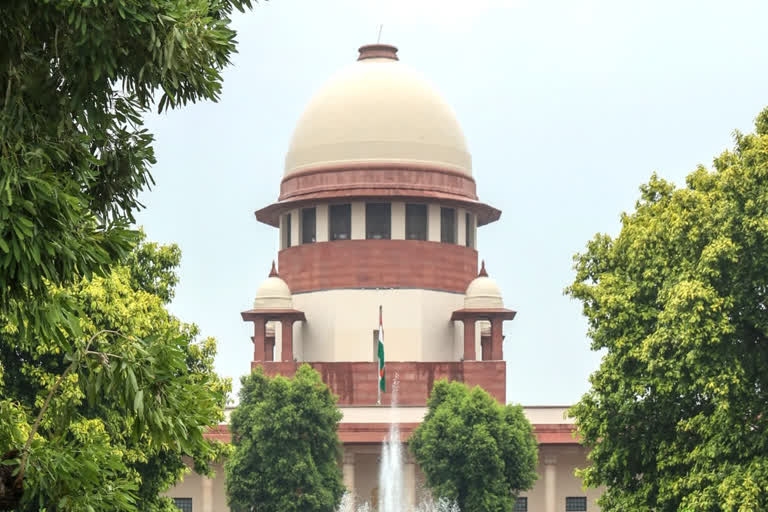
The Supreme Court of India on Wednesday delivered a stern rebuke to the Municipal Corporation of Delhi (MCD) and the Archaeological Survey of India (ASI), citing a “total lackadaisical approach” in their handling of heritage conservation within the national capital. The court’s observations followed a petition filed by Delhi resident Rajeev Suri, which raised concerns regarding the ongoing preservation and restoration of various heritage sites across the city.
A Bench comprising Justices Ahsanuddin Amanullah and N. Kotiswar Singh expressed deep dissatisfaction with the conduct of the authorities. During the proceedings, the court noted that the agencies tasked with maintaining these structures appeared “blissfully ignorant” of critical details, including ownership records, settlement status, and the current condition of the sites. The Bench emphasized that the departments had failed to provide adequate status reports, leaving the court without the necessary information to address the decline of these historic monuments.
The hearing focused specifically on the state of five heritage monuments located in Zamrudpur, South Delhi. A report submitted by a court-appointed team of commissioners, led by senior advocate Gopal Sankaranarayanan, described the condition of these sites as “frightfully terrible.” The report highlighted that despite being officially notified as heritage structures, the monuments have faced severe encroachment. In some instances, multi-storey buildings have been constructed right up to the sites, while interiors were reported to have been used as dumping grounds or, in one specific case, as a cow shed.
Justice Amanullah took strong exception to the responses provided by the civic bodies. Questioning the MCD on why previous court directions to clear encroachments had not been met, the Bench termed the local body's efforts as “totally casual.” While the MCD counsel submitted that initial waste clearance had been completed and further restoration efforts were underway, the court maintained that the overall management remained deeply problematic.
The ASI also faced intense scrutiny for its inability to maintain the structures under its jurisdiction. When the Director General of the ASI, Yadubir Singh Rawat, cited a shortage of resources and the immense task of managing nearly 4,000 monuments as factors for the lapses, the Bench dismissed these concerns. The court urged the agency to directly approach the Centre for additional manpower rather than allowing red-tapism to hinder the protection of national heritage.
Observing an “absolute lack of cohesion” among the various government departments involved, the Supreme Court has decided to intervene by mandating improved inter-departmental coordination. The Bench indicated that a senior official from the Central government would eventually be tasked with overseeing the efforts of the various agencies to ensure that future actions are implemented effectively on the ground.
In a significant move to ensure accountability, the court has summoned several high-ranking officials to appear in person for the next hearing scheduled for October 15. The list of those ordered to attend includes the Secretary of the Union Ministry of Culture, the Commissioner of the MCD, the Chairperson of the New Delhi Municipal Council (NDMC), the Secretary of the Delhi government’s Department of Archaeology, the Director General of the ASI, the Commissioner of the Delhi Development Authority (DDA), the Director General of the Central Public Works Department (CPWD), and the Managing Director of the Delhi Tourism and Transportation Development Corporation (DTTDC). Through these measures, the court aims to break the cycle of bureaucratic negligence that has left Delhi’s historical landmarks vulnerable to urban decay and illegal occupation.







Comments