


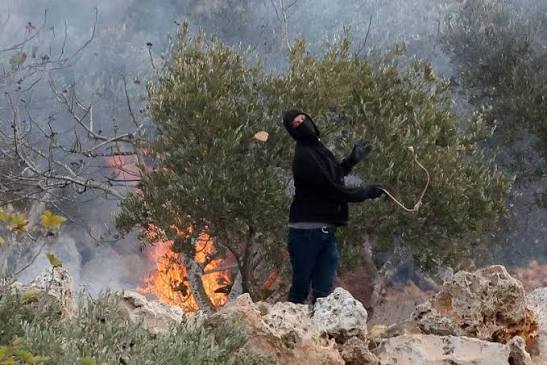
Israeli settlers launched a series of coordinated attacks against at least eight Palestinian villages in the northern West Bank on Friday, causing significant property damage and injuries as the region's annual olive harvest was disrupted. Witnesses reported that attackers set fire to cars and trees, which are essential to the agricultural livelihoods of tens of thousands of Palestinian families in the area.
According to local officials and the Palestine Red Crescent Society, medical teams were dispatched to provide treatment to 14 injured individuals across six locations, with additional reports of four more injuries in other areas. The violence represents a sharp escalation in a year that has already seen a notable rise in settler-related incidents across the territory, which has been under Israeli military rule since the 1967 Middle East War.
In the village of Abu Falah, the situation grew particularly tense when settlers confronted residents and peace activists arriving for the harvest. While Israeli troops arrived to disperse the crowds, a violent encounter ensued. Local council member Nazem Saleh Shoman alleged that soldiers fired live ammunition at his colleague, Abdel Jaber Hassan, while he was carrying agricultural tools. In contrast, the Israeli military claimed that soldiers opened fire because an individual was moving toward them while holding a sharp object. The military has formally acknowledged that a journalist was injured during these events.
Human rights organisations have expressed deep concern regarding the response of security forces to the ongoing unrest. Ziv Stahl, executive director of the Israeli rights group Yesh Din, stated that soldiers are frequently failing to protect Palestinian civilians and, in some instances, have been accused of actively assisting the settlers. These allegations align with reports from the UN Office for the Coordination of Humanitarian Affairs, which documented more than 1,600 attacks across the West Bank between January and August of this year.
The intensity of the current violence is occurring against a backdrop of political volatility, with Israel’s national election scheduled for October 27. The current government has faced intense domestic and international criticism for its handling of the situation. The British government has recently raised concerns regarding the campaign of violence, accusing the authorities of turning a “blind eye” to the activities of the settlers.
Critics, including international observers and local advocacy groups, argue that the impunity enjoyed by those responsible for the attacks remains a significant issue. Yesh Din and other rights groups note that the individuals behind the arson and physical assaults are rarely identified, arrested, or indicted for their actions. This perceived lack of accountability has led to accusations from various quarters regarding the nature of the campaign against the Palestinian population.
As the olive harvest continues, residents remain wary of further disruptions to their ability to access farmland safely. With over 500,000 Israeli settlers now living in the West Bank alongside approximately three million Palestinians, the potential for friction during such seasonal activities remains high. The recent events have left many families facing both the loss of essential property and increased uncertainty about their safety during the remainder of the harvesting period.







Comments