


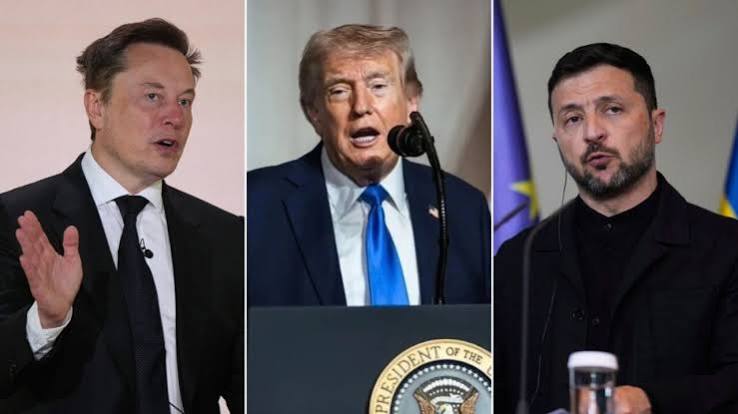
United States President Donald Trump has publicly denied any role in restricting Ukraine's access to the Starshield satellite network, a military-grade service operated by Elon Musk’s SpaceX. The denial comes amid growing concern over technical limitations that hindered Kyiv's ability to defend itself during a series of lethal Russian strikes earlier this week.
On Tuesday night, speed limits on the network were capped at 160km/h (100mph), a move that reportedly caused any weapons traveling at higher speeds to lose connectivity. The resulting operational challenges coincided with Russian attacks that left approximately 600,000 people in Ukraine without electricity, as essential communications and energy facilities utilized by the military were impacted.
When questioned by reporters while departing the White House on Friday, President Trump stated, "It wasn't me and I don't think it was Elon." He further suggested that he was unsure if the network performance had actually been degraded at all. SpaceX owner Elon Musk has previously suggested that the US government, specifically the Pentagon, manages Starshield and could be responsible for any operational adjustments.
The restriction has ignited a debate in Washington, with a bipartisan group of US senators signing a formal letter demanding an immediate investigation. The senators noted that the reported degradation of the network severely hampered Ukraine's defensive capabilities against incoming missile and drone attacks aimed at civilian infrastructure. Reuters reported on Thursday, citing two US officials and one Western official, that the order to throttle the service originated from within the White House.
Tensions between Washington and Kyiv have escalated recently, partly due to disputes over Ukraine's decision to resume strikes on Russian oil refineries. President Trump has publicly criticized these strikes, labeling them a "disgrace," while Ukrainian President Volodymyr Zelensky has argued that Kyiv maintains the right to defend its energy infrastructure. Zelensky noted that Ukraine would only halt such operations if Moscow ceased its own attacks on similar facilities.
The diplomatic friction is unfolding against the backdrop of broader discussions regarding Western aid. At a recent summit in Brussels, President Zelensky informed EU leaders that the ongoing war is expected to cost approximately €155 billion next year, with a requirement of at least €70 billion in support from European partners for defense and weaponry. EU member states have emphasized the necessity of providing continued support, including technical assistance with satellite and early warning systems.
French President Emmanuel Macron, speaking at the conclusion of the summit, reaffirmed the European Union’s commitment to supporting Kyiv. Macron stressed that it is Europe’s responsibility to maintain a firm stance despite what he described as "ambiguities" in international support. The summit also addressed the urgent need to help Ukraine navigate the approaching winter, which marks the fifth since the full-scale invasion began in 2022.
While President Trump described President Zelensky as "more difficult to deal with" than Russian President Vladimir Putin in previous comments, he insisted during his Friday remarks that his personal relationship with his Ukrainian counterpart remains good. As the investigation into the Starshield disruptions proceeds, questions remain regarding the future of satellite-based defensive operations in the conflict zone and the extent of US involvement in managing these critical communication tools.







Comments