


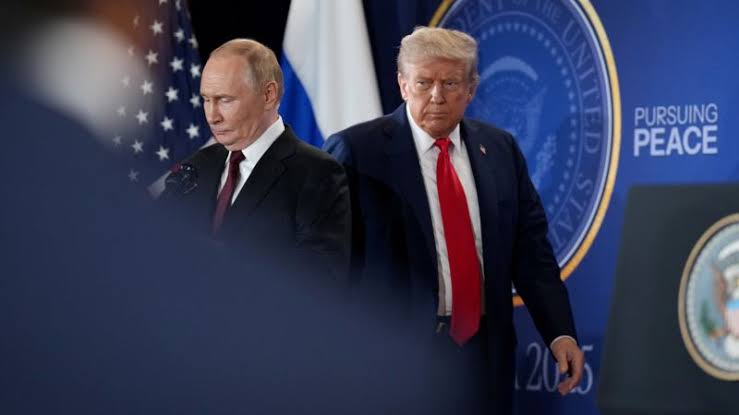
President Donald Trump has confirmed that the United States is actively engaged in diplomatic discussions with Russia and China aimed at nuclear disarmament. The president made the announcement during a recent interview with the broadcaster Newsmax, highlighting the urgent need to address the proliferation of atomic weapons globally. While specific details of these high-level engagements remain limited, the administration appears focused on finding a pathway toward what the president described as denuclearisation.
The current global nuclear landscape is dominated by the United States and Russia, which together hold approximately 86 percent of the world’s total nuclear weaponry. According to data from the Stockholm International Peace Research Institute (SIPRI), both nations maintain arsenals exceeding 4,000 warheads each. Russia currently possesses the world’s largest stockpile, with the United States holding a comparable number. These figures serve as a stark reminder of the massive destructive potential contained within the existing security frameworks of the two former Cold War adversaries.
China, while currently possessing a significantly smaller arsenal, is rapidly modernizing and expanding its capabilities. SIPRI reports that Beijing’s stockpile has grown to an estimated 620 warheads over the past year. During his interview, President Trump expressed concern that China is racing to close the gap with the US and Russia. He further stated his belief that China could potentially catch up to the current superpower stockpiles within the next five years, a development that adds a new dimension of urgency to the ongoing disarmament talks.
Despite the stated goals, the diplomatic environment remains complex. President Trump noted that China does not appear immediately willing to commit to full disarmament, though he confirmed that the dialogue between the nations continues. Reports suggest that these discussions have involved direct communication with Chinese President Xi Jinping, although the White House has not provided further specifics regarding the content of these exchanges or the progress made toward a formal agreement.
These developments unfold in a climate of heightened global anxiety regarding nuclear stability. The announcement comes shortly after the expiration of the Strategic Arms Reduction Treaty, a critical bilateral agreement that previously imposed limits on the nuclear arsenals of the US and Russia. The collapse of this framework has left a vacuum in international arms control, prompting concerns about an unchecked escalation in nuclear capacity.
International observers have expressed growing alarm over the lack of robust control mechanisms. Former Australian Minister of Foreign Affairs, Gareth Evans, remarked that the world has become increasingly complacent regarding the dangers of nuclear conflict. With many long-standing arms control agreements now considered dead, dying, or on life support, the historical taboo against the threat or use of nuclear weapons is perceived to be eroding, further complicating the efforts of world leaders to secure a stable future.
In response to the shifting security landscape, particularly amid the conflict in Ukraine, European powers have also begun to adjust their defense postures. French President Emmanuel Macron previously announced the Forward Deterrence Initiative, designed to address concerns sparked by the intensifying rhetoric surrounding Russia’s nuclear capabilities. As these geopolitical tensions persist, the outcome of the ongoing talks mentioned by President Trump remains a focal point for international diplomacy. Whether these negotiations can eventually yield a verifiable path toward denuclearisation, or at least a renewed set of constraints, remains to be seen as the world watches the major nuclear powers recalibrate their strategic positions.







Comments