


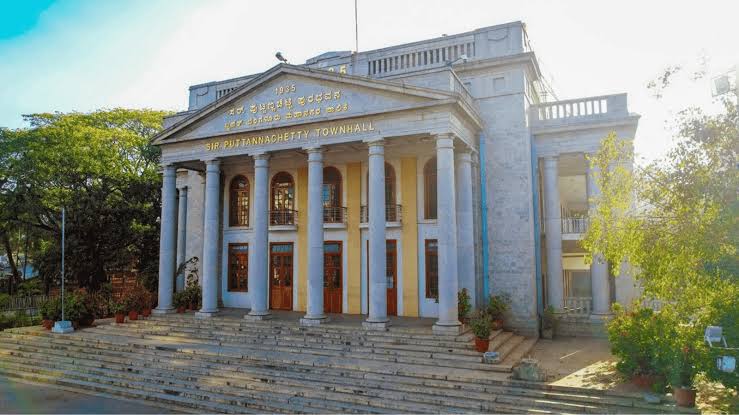
The Bengaluru Police have officially denied permission for the Cockroach Janta Party (CJP) to hold a 'Tiranga march' at the city’s Town Hall. The event, which was scheduled for Friday, was intended to be part of the party’s broader ‘Lehra Do Tiranga’ campaign. According to the organisers, the march was planned to commence at 4 pm at Town Hall, with participants intending to walk towards the Quit India Memorial located near Mysuru Bank Circle on Kempegowda Road.
Authorities have grounded their decision in a standing directive from the Karnataka High Court, which mandates that all protests and public demonstrations in Bengaluru must be confined to Freedom Park. A senior police officer noted that the rejection was partly driven by the fact that the organisers had publicised their assembly plans on social media without receiving formal clearance. Beyond the legal restrictions, police officials also expressed significant concerns regarding the potential for widespread traffic congestion in the heart of the city if such a gathering were permitted to proceed at the requested location.
Rahul Jagrata, a Karnataka coordinator for the CJP, stated that the organisers had submitted an intimation letter to the authorities regarding their intentions. He maintained that the group remained hopeful for a reconsideration, despite the lack of a formal approval. Defending the nature of the event, Jagrata said, "We have given an intimation letter to the police and are hoping for permission. It is a peaceful Tiranga march from Town Hall to the Quit India Memorial near Mysuru Bank on Kempegowda Road, and not a protest."
The administrative stance was further clarified by Karnataka Chief Minister D.K. Shivakumar, who remarked that the organisers had not consulted the government in advance regarding their plans. He reiterated the government's position that Town Hall is not an authorised venue for conducting demonstrations or rallies. The state government’s adherence to the High Court directive regarding protest venues appears to be the primary hurdle for the organisers in this instance.
The Bengaluru event is just one piece of a multi-city effort by the CJP under its ‘Lehra Do Tiranga’ banner. The campaign aims to hold similar marches in various urban centres across India. The group has experienced varying degrees of administrative response in other cities; in Mumbai, the party successfully secured permission to hold a march at Azad Maidan on the same day.
Meanwhile, the situation in the national capital remains stringent. Authorities in Delhi have closed access to Central Park in Connaught Place for October 16 and 17, effectively blocking the location where the group had proposed holding a gathering. The ongoing friction highlights the complexities surrounding the organisation of public marches in major metropolitan areas, where local administrations balance the right to assemble with the necessity of maintaining order and adhering to established judicial guidelines.
As it stands, the CJP-led coalition—which includes organisations such as Jagrata Karnataka and My Vote, My Right—had expected a turnout of between 200 and 300 participants for the Bengaluru march. With the denial of permission at the intended site, the organisers are now navigating the limitations imposed by local authorities. The case underscores the recurring tension between political groups attempting to choose prominent public spaces for their events and the official state policy of routing such activities through designated protest sites.








Comments