


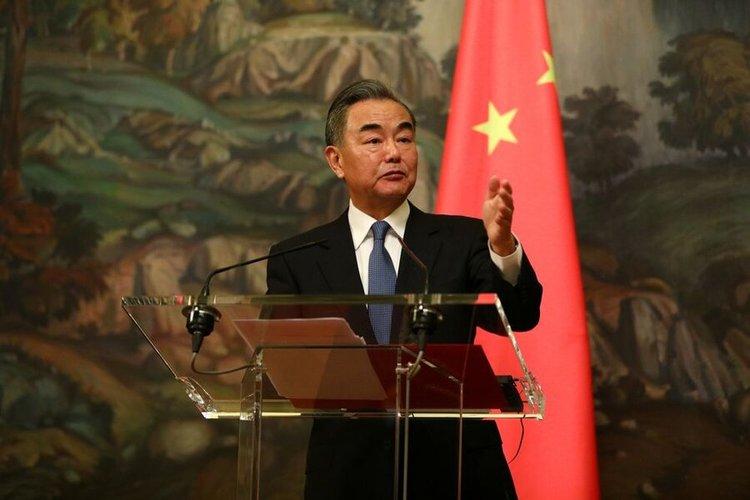
Chinese Foreign Minister Wang Yi has formally urged Israel to discontinue the forced establishment of settlements in the West Bank and to reverse recent actions taken in the region. The call, issued by the Chinese ministry, came during a face-to-face meeting between Wang and Israeli President Isaac Herzog on the sidelines of a conference held in Azerbaijan on Thursday.
Describing the Palestinian question as the "greatest historical injustice of this century," Wang reaffirmed Beijing's long-standing diplomatic position that a two-state solution remains the only correct path forward. China has increasingly sought to position itself as a central mediator in Middle Eastern conflicts. This effort follows Beijing's successful brokering of a diplomatic restoration deal between Iran and Saudi Arabia in 2023, as well as its involvement in earlier attempts to secure a ceasefire in the ongoing conflict involving Israel, Gaza, and Iran.
Wang noted that the current humanitarian situation remains critical. He stated that the immediate priority for the international community should be to secure full access to Gaza to halt the ongoing humanitarian catastrophe. Furthermore, he expressed China’s willingness to collaborate with international partners to encourage all parties to resume dialogue and seek a durable political solution to the protracted conflict.
Following the meeting, President Isaac Herzog addressed the discussion in a post on the social media platform X. He stated that he was pleased to meet with Wang and noted that their conversation centered on bilateral relations between China and Israel, as well as the broader situation in the Middle East. Herzog added, "I emphasised Israel's desire for peace in the region, alongside the strategic threats to our security, first and foremost from Iran and its terror proxies."
China maintains complex diplomatic and economic ties in the region. It remains the largest purchaser of Iranian oil, a relationship that has historically faced scrutiny under United States sanctions related to Tehran's nuclear programme. Meanwhile, Beijing has also directed efforts toward fostering internal Palestinian unity, including a 2024 initiative that brought rival factions together to discuss an interim national reconciliation government for the West Bank and Gaza. However, that agreement was never fully implemented.
The diplomatic push comes against a backdrop of ongoing violence. Although large-scale bombardment has subsided, daily strikes in Gaza continue. According to reports, more than 1,400 Palestinians have been killed in Israeli strikes since October 2025. The region remains deeply unstable one year into a US-brokered ceasefire that was intended to serve as the first phase of a broader deal to end the war, which was originally triggered by the 7 October 2023 attack on Israel.
Currently, the implementation of subsequent phases of the ceasefire deal remains stalled. Both Israel and Hamas have consistently accused one another of violating the terms of the agreement, leaving the civilian population to navigate persistent threats of displacement and severe food security challenges. As China continues its advocacy for a political solution, the international community remains focused on whether diplomatic pressure can break the current impasse between the warring parties.







Comments