


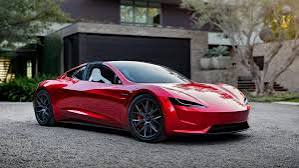
Tesla has officially opened pre-bookings in India for its highly anticipated next-generation Roadster, an electric vehicle that aims to redefine performance through technology adapted from SpaceX. The announcement, which follows years of speculation since the car’s initial concept unveiling in 2017, includes details for multiple tiered variants. While the company has provided a glimpse into the car’s capabilities, including its ability to navigate vertical surfaces and perform aerial maneuvers, industry observers note that the vehicle is not expected to begin production until 2028.
The booking process for Indian consumers is now live, offering options ranging from a performance-oriented model to a specialized variant equipped with acceleration thrusters. The 'Performance' package, which includes active aerodynamics and a multi-mode suction system, is priced at ₹45,05,000. For those seeking higher specifications, the 'Thrust' variant—which incorporates the performance package alongside additional acceleration thrusters—is listed at ₹2,45,24,000. A third, top-tier 'Rocket' option, which reportedly includes a full flight system, is currently available by invitation only, with no official pricing disclosed by the company.
The technological core of the new Roadster concept centers on a fan-based suction system developed by SpaceX and mounted on the vehicle's underside. During a recent demonstration, the car showcased the ability to generate up to two Gs of suction force, allowing it to navigate a multi-story curved ramp and travel vertically. The vehicle also utilized cold-gas thrusters to assist in maneuvering. According to Tesla, the car's design aesthetics draw significant inspiration from high-performance aircraft, specifically the Lockheed SR-71 Blackbird and the Lockheed Martin F-35.
Despite the excitement surrounding the demonstration, which featured the car driving upside down and leaping over obstacles, the path to commercial viability remains complex. Tesla has emphasized that these features serve as part of a conceptual roadmap. With the original 2017 concept having yet to reach the production line, the current demonstration has been viewed by some analysts as a display of engineering ambition rather than an imminent market launch. The Roadster's previous generation was available between 2008 and 2012, making the upcoming 2028 target a significant milestone for the brand.
For prospective customers, the current reality involves a significant "wait-and-watch" approach. Beyond the production timeline, the primary hurdle for the Roadster will be navigating international regulatory frameworks. Questions remain regarding the road-legality of the suction and flight systems in various markets, including India. As Tesla navigates these regulatory puzzles, the company has begun accepting payments for pre-orders via credit card and UPI, marking a tentative step forward for a vehicle that aims to blend the lines between traditional automotive engineering and aerospace technology.
Ultimately, while the vision of a car capable of defying gravity has captivated interest, the actual implementation of these features in a road-going vehicle will depend heavily on safety standards and transportation laws. As Tesla moves toward the 2028 production goal, the automotive industry continues to monitor how these experimental features will be adapted to fit existing infrastructure and safety protocols globally.







Comments