


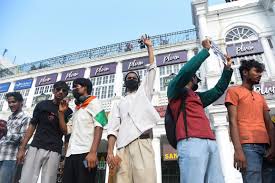
The Supreme Court of India has issued a stern observation regarding the potential economic impact of security restrictions imposed in Delhi’s Connaught Place. During a hearing on Friday, the bench, led by Chief Justice of India Surya Kant and Justice Joymalya Bagchi, noted that it would be prepared to exercise its constitutional powers to grant compensation if it determines that the administrative measures taken by the New Delhi Municipal Council (NDMC) have caused unlawful business losses.
The judicial intervention follows a petition filed by the Delhi Kirana Committee and the Delhi Iron and Hardware Merchant Association. The associations challenged the restrictions, which were implemented by the NDMC in anticipation of a 'Tiranga' protest march organized by the Cockroach Janata Party (CJP) at Central Park. Advocate Jai Anant Dehadrai, appearing for the traders, informed the bench that these sudden restrictions, notified by the council just the previous night, threaten to disrupt commerce worth approximately Rs 200 crore daily.
Addressing the urgency of the matter, the Chief Justice expressed concern over the timing of the protests, particularly as they coincide with the festive season—a critical period for small-scale shopkeepers and their families. "We hope better sense will prevail on everyone," the CJI remarked during the proceedings. "We know that all small shopkeepers, they earn their livelihood during these days. We know the hardship and difficulty entire families will face."
During the session, the court discussed its constitutional tort jurisdiction, with Justice Bagchi emphasizing that the bench would not hesitate to act if it finds the NDMC’s administrative orders to be disproportionate. "If there is a loss of business, and we hold that it is unlawful to your clients, we will exercise our powers under constitutional tort jurisdiction. Let’s cross that bridge when it comes," Justice Bagchi stated. He further reiterated that if the restrictions are deemed excessive, the court possesses ample authority under public law to mandate compensation for affected parties.
The bench acknowledged that a similar matter is currently being heard by the Delhi High Court. While the petitioners argued that the specific grievances presented before the Supreme Court warrant separate consideration, Justice Bagchi noted that the competing interests of protest organizers, public order, and commercial activity are inherently interconnected. The court ultimately declined to grant an immediate hearing, scheduling the case for October 26, following the conclusion of the Dussehra vacation.
The legal challenge highlights the delicate balance between the right to hold public protests and the economic rights of local business owners in Delhi’s central commercial hub. As the festive season approaches, the retail sector is particularly sensitive to disruptions in accessibility and footfall, with merchant bodies warning that extended shutdowns could have long-term financial consequences for the local economy.
As the case proceeds, the focus will likely shift to whether the NDMC can justify the necessity and scale of the restrictions implemented at Connaught Place. For now, the court’s decision to keep the petition on its roster for late October ensures that the issue of potential state-funded compensation for lost trade remains a key element of the ongoing judicial review.








Comments