


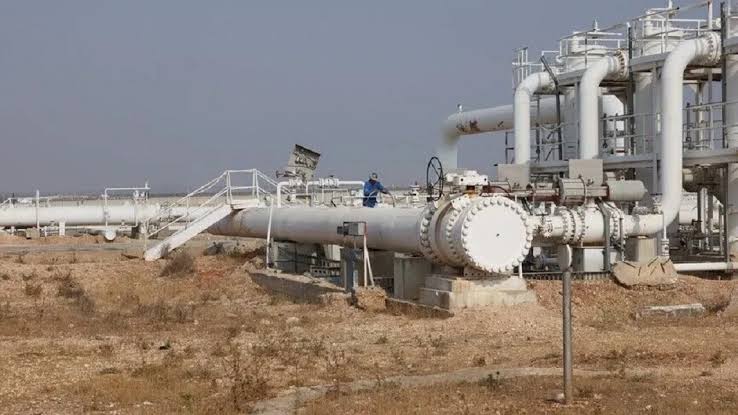
Two separate incidents involving critical energy infrastructure have caused significant disruptions in Syria, as state officials reported damage to pipelines carrying gas and petroleum products on Thursday. The events, occurring against a backdrop of ongoing efforts to rehabilitate the nation’s energy sector following years of conflict, have prompted emergency responses from technical teams tasked with containing the damage and ensuring the continuity of supply for power stations.
According to reports from the Syrian Arab News Agency (SANA), citing the state-owned Syrian Petroleum Company, the first incident involved an explosion on the Jbessa gas export pipeline located in the al-Arabidi area of Hasakah province. The blast ignited a fire, forcing emergency crews to move quickly to isolate the affected section and close relevant valves to suppress the flames. The Syrian Petroleum Company has characterized this incident as an act of sabotage.
Simultaneously, a separate failure was identified in the Baniyas-Homs pipeline in the Hadida area, situated west of Homs. This incident resulted in a petroleum product leak. Unlike the Jbessa explosion, preliminary information reported by Al Jazeera suggests that the damage in the Hadida area may be connected to an attempted theft of fuel, though official investigations are ongoing to confirm the specific cause and identify the parties responsible for the breach.
To mitigate the impact on the national grid, officials stated that alternative arrangements have been activated to preserve gas supplies for essential power stations while repairs are underway. Domestic gas services remain unaffected by the damage. The Syrian Petroleum Company has deployed emergency and technical teams to both sites to isolate the damaged segments and commence the necessary restoration work.
These disruptions are the latest in a series of setbacks for Syria's energy infrastructure. Earlier this month, a separate oil pipeline near Tal Hamis, also in Hasakah province, was damaged in another incident that the Syrian Petroleum Company attributed to sabotage. Such vulnerabilities pose persistent challenges as the state continues its long-term project to restore oil production in northeastern fields and reconnect these resources to processing facilities in Homs and the coastal city of Baniyas.
The affected pipelines are central to Syria's efforts to rebuild its domestic energy capabilities. In January 2026, the Syrian Petroleum Company initiated the transport of raw gas from the Jbessa fields to the Furqlus gas plant in the Homs countryside, reaching a capacity of approximately 1.2 million cubic metres per day to bolster electricity generation. Similarly, the Baniyas-Homs pipeline remains a vital artery for the transport of petroleum products. The Baniyas refinery, which is currently undergoing a comprehensive overhaul, aims to increase its processing capacity from 80,000 to 130,000 barrels per day.
Looking ahead, the government maintains a focus on emergency repairs and the long-term expansion of the national transportation network. A September 2026 report from the Baker Institute for Public Policy highlighted that the Syrian Petroleum Company is actively working on repairing existing assets while planning for the construction of a heavy-crude pipeline designed to link the oilfields in the northeast directly to the refinery in Baniyas. Despite these efforts, the frequency of recent incidents underscores the fragility of the network as the country attempts to stabilize its energy supply amidst complex security and logistical hurdles.








Comments