


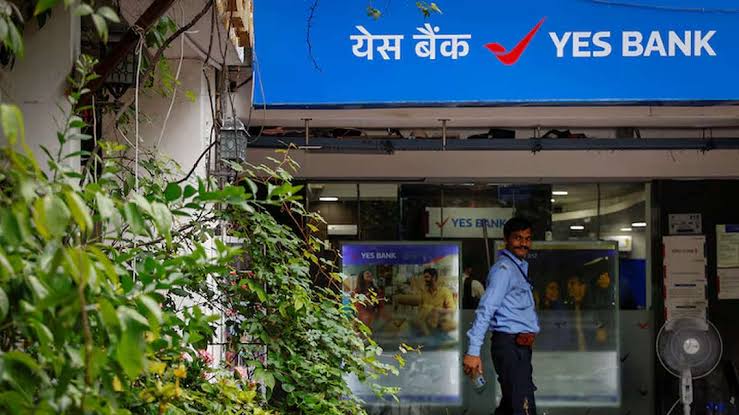
In a landmark judgment, the Supreme Court of India has upheld the Bombay High Court's decision to quash the write-off of Additional Tier 1 (AT1) bonds worth ₹8,415 crore by Yes Bank. The ruling, delivered by a bench comprising Justices Dipankar Datta and Augustine George Masih, concludes a contentious six-year legal dispute that originated during the bank's massive restructuring exercise in 2020.
The legal controversy dates back to March 2020, when the Reserve Bank of India (RBI) orchestrated an emergency bailout of the struggling private lender amidst allegations of fraud and financial mismanagement. As part of this revival package, a consortium of major financial institutions—led by the State Bank of India—was brought in to inject equity into the bank. During this process, an administrator appointed to manage the lender wrote down the value of the AT1 bonds, a move that bondholders vehemently contested, arguing that the securities had been mis-sold.
The Supreme Court bench questioned the procedural validity of the administrator's actions. During the proceedings, the judges specifically queried whether the RBI and its appointed administrator were fully cognizant of the legal consequences of not retaining the write-down clause within the reconstruction scheme. The court stated that the administrator, acting as a substitute for the board of directors, had overstepped the powers granted to him under the Banking Regulation Act. The ruling emphasized that an administrator cannot assume regulatory powers that are not explicitly vested in their role.
“It is a settled legal principle that a power not specifically conferred cannot be implicitly vested through a general, omnibus savings clause. To that extent, we rule against Yes Bank and the administrator,” the apex court observed. By rejecting the legitimacy of the write-down, the court has effectively held that the administrator lacked the authority to perform an action that was not part of the formal restructuring scheme sanctioned by the regulator.
The impact of this ruling on the financial markets was immediate. Shares of Yes Bank experienced a sharp decline on Thursday, dropping by approximately 14.53% to reach ₹18.12 per share following the announcement. This market volatility underscores the significance of the decision, particularly for a bank that has recently seen changes in its shareholder structure, with Japan’s Sumitomo Mitsui Banking Corp (SMBC) now serving as its largest shareholder.
For the affected investors, the judgment comes as a major relief. The court's order mandates that Yes Bank is now liable to repay the full value of the AT1 bonds—amounting to ₹8,415 crore—along with the accrued interest. This outcome addresses the grievances of bondholders who had long argued that their investments were unfairly liquidated during the lender's crisis period.
AT1 bonds, which gained prominence following the 2008 global financial crisis, are categorized as the riskiest form of fixed-income securities, often offering higher returns to compensate for their perpetual nature and potential for conversion into equity or write-offs. Their treatment in recent years has drawn significant international attention, notably following the decision by Swiss authorities to write down $17 billion worth of Credit Suisse bonds during its takeover by UBS. As India’s banking sector moves past this long-standing litigation, the focus now shifts to how Yes Bank will manage the financial implications of the mandated repayment.








Comments