


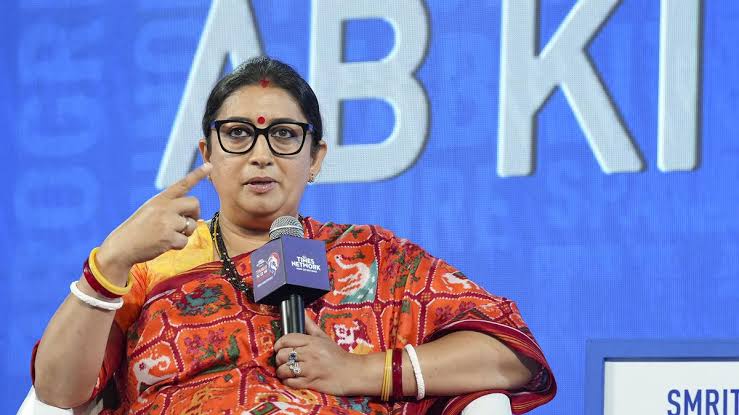
Union Minister Smriti Irani has launched a scathing critique of Congress leader Rahul Gandhi, accusing him of undermining India’s democratic institutions through his persistent and pointed remarks against the Election Commission of India. Speaking in a recent interaction, the senior Bharatiya Janata Party (BJP) leader suggested that the opposition leader’s rhetoric reflects a disregard for the constitutional bodies that govern the nation’s electoral processes.
The contention stems from ongoing political discourse regarding the autonomy and functioning of India's election oversight body. Irani asserted that the Election Commission stands as the primary guardian of a vibrant democracy, ensuring that the will of the electorate is reflected accurately and fairly. She questioned why the former Congress president repeatedly singles out this constitutional authority for criticism, arguing that such behavior is inconsistent with the spirit of upholding democratic norms.
Highlighting what she perceives as a dangerous trend, Irani stated, "Who ensures a vibrant democracy in our country? The Election Commission of India. Who does Rahul Gandhi incessantly attack? The Election Commission of India." According to the minister, this pattern of engagement indicates that Gandhi may prefer a system of 'mobocracy' over established legal and institutional frameworks. She emphasized that attacking the credibility of the commission serves only to weaken the foundational structures that maintain political stability and electoral transparency.
This latest exchange reflects the widening gulf between the ruling party and the opposition as both sides prepare for the broader political landscape. For the BJP, defending the integrity of constitutional institutions like the Election Commission is a key part of their messaging, frequently portraying the Congress party as a destabilizing force. Conversely, the opposition has often expressed concerns regarding the perceived impartiality of various state bodies, leading to intense parliamentary and public debates.
Observers of Indian politics note that this rhetorical sparring is indicative of a deeply polarized environment. While the government maintains that all constitutional offices are functioning independently and strictly within their mandates, opposition leaders have frequently raised alarms about institutional capture. The accusations traded by leaders like Irani are part of a broader strategy to define the narrative around democratic governance ahead of future electoral cycles.
The impact of such political posturing remains a subject of debate among constitutional experts. Some analysts argue that persistent criticism of independent bodies can erode public trust in the electoral system itself, potentially leading to voter apathy or cynicism. Others maintain that holding institutions accountable is a necessary function of a healthy, robust opposition, even if the language used is sharp or confrontational.
As the debate continues, it is expected that both parties will double down on their respective positions. The BJP is likely to continue highlighting what they label as the opposition's "anti-institutional" stance, while the Congress and its allies are anticipated to maintain their pressure on the government, alleging that independent regulators are increasingly aligned with the executive branch. This ongoing friction remains a defining feature of contemporary political discourse in the country.








Comments