


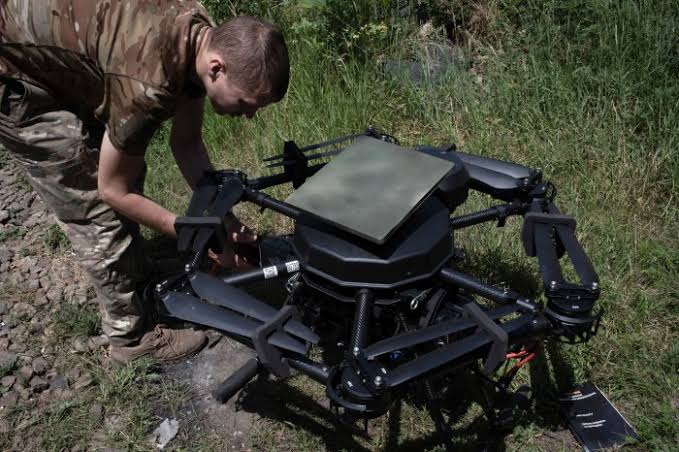
Ukrainian authorities have raised concerns regarding sudden service disruptions to SpaceX’s Starlink and Starshield satellite systems, claiming these outages have hindered ongoing drone strike missions and air defence efforts. According to reports cited by officials, the connectivity issues appear linked to the speed of the drones being utilized, with services reportedly dropping out when the platforms exceed speeds of 160 km/h, and in some instances, even as low as 80 km/h.
The reliance on these two systems has been a central component of Ukraine’s defensive strategy since the onset of the conflict. While Starlink serves as a primary tool for battlefield communications, logistics, and intelligence gathering, Starshield is specifically tailored for government and military use. Ukrainian President Volodymyr Zelenskyy addressed the situation during a meeting in London with British Prime Minister Andy Burnham, noting that the country faced difficulties with Starlink and intelligence systems amidst ongoing Russian attacks.
Distinguishing between the two services is essential to understanding the current operational impasse. Starlink is a commercial satellite internet service managed by SpaceX, designed for a broad base of users, including households and major industries. It provides the connectivity necessary for ground forces to operate reconnaissance and defensive drones. In contrast, Starshield is a distinct SpaceX business unit developed to support the Pentagon, providing enhanced encryption and specialized capabilities for government and military missions.
Elon Musk, the head of SpaceX, has largely remained silent on the specific allegations of restrictions but provided clarity on the governance of the two systems via social media. He emphasized that while Starlink is owned and controlled by SpaceX, the Starshield systems are under the direct ownership and control of the United States government. Consequently, Musk asserted that any usage constraints, including speed or operational limits, are determined by the US military and, ultimately, the President of the United States.
Musk has previously maintained that the commercial Starlink service is intended strictly for civilian or defensive purposes. He has stated that it is inappropriate for a commercial entity to facilitate offensive military operations, which explains why the service has been restricted for certain types of long-range missions. However, the current reported speed caps have led to frustration among Ukrainian officials, who argue that these limitations prevent their interceptor drones from engaging with faster Russian targets.
The importance of this technology cannot be overstated; since the first satellites were launched in 2019, Starlink has built a massive low-Earth-orbit constellation of over 11,000 satellites. This network has provided Ukraine with a significant communication advantage, allowing the military to coordinate drone strikes and protect its airspace. As the conflict continues, the debate over how these dual-purpose satellite systems should be utilized highlights the evolving intersection of commercial technology and modern warfare.
Moving forward, the situation remains precarious for Ukrainian forces who are calling for the total removal of speed limits on the Starshield network. A former Ukrainian minister recently noted that while connectivity has been restored at speeds up to 160 km/h, the ability to operate without such technical hurdles is considered critical for the ongoing defence efforts. Whether the US government will adjust these parameters remains a point of significant strategic interest for the parties involved in the conflict.








Comments