


US military weighs using MOAB in strike plans against Iranian sites
The massive non-nuclear weapon remains part of strategic options as officials review potential strike packages against Iran
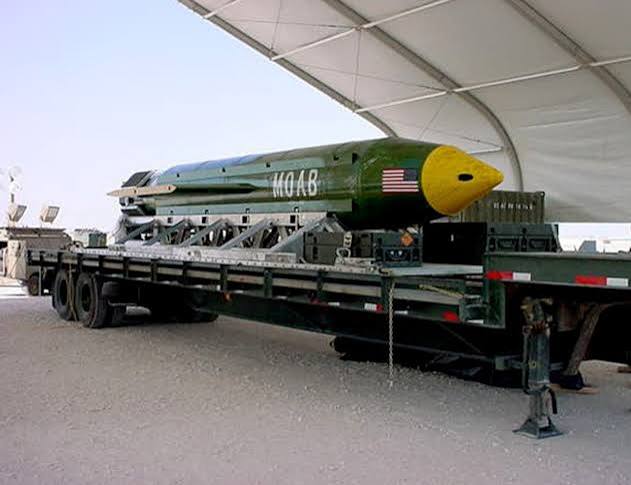
The United States military has incorporated the GBU-43/B Massive Ordnance Air Blast (MOAB) into its potential strike planning regarding Iran, according to reports citing officials familiar with the discussions. The weapon, widely referred to as the “mother of all bombs,” is being considered as a possible option for targeting Iranian energy infrastructure and suspected nuclear facilities, including those at Pickaxe Mountain. While these plans exist, officials have clarified that no strike has been authorized or finalized.The inclusion of the MOAB comes as the administration of President Donald Trump evaluates options to resolve a conflict that has persisted for over six months. Despite the ongoing nature of the war, there is currently little sign of a diplomatic resolution. President Trump has maintained that preventing Iran from obtaining nuclear weapons is a priority, and the military’s planning covers a broad range of scenarios as the administration seeks a path to end the hostilities.Regarding the status of these plans, a White House official stated that the administration does not comment on sensitive military matters that may or may not exist, while reaffirming that all options remain under consideration to ensure Iran does not acquire nuclear capabilities. The Pentagon stated that it prepares for a variety of operational scenarios to fulfill directives from the president and the defence secretary.The MOAB is categorized as the largest non-nuclear bomb currently in the United States military arsenal. Weighing approximately 21,600 pounds, or 9.8 tonnes, the munition is designed to generate a massive blast across a wide surface area. Unlike bunker-busting weapons specifically engineered to penetrate deep underground, the MOAB is designed to detonate above the surface, projecting its force outward. It is capable of impacting an area equivalent to roughly nine city blocks.Developed during the Iraq War, the weapon was intended to serve both tactical and psychological purposes, aiming to intimidate opposing forces. President Trump previously authorized the use of a MOAB in 2017 during a strike on an Islamic State tunnel complex in Afghanistan. Following that operation, Afghan officials reported the destruction of ammunition, weapons, and tunnels, stating that 36 fighters were killed with no reported civilian casualties.Despite its immense power, experts and military planners have raised questions regarding the effectiveness of the MOAB against Iran’s most heavily fortified facilities. Because many of these sites are believed to be protected by deep layers of granite, the MOAB may lack the deep-penetration capabilities required to destroy them. Furthermore, the significant blast radius of the bomb has prompted concerns regarding potential civilian casualties if the weapon were utilized near populated energy infrastructure or other non-military locations.As the administration navigates the conflict, the MOAB is being viewed by some planners as a tool for applying psychological pressure on Tehran. Although military sources have noted that the bomb is unlikely to force a total capitulation or guarantee a decisive victory, it remains one of several options discussed to alter the current course of the conflict. The US military is also preparing for the possibility of Iranian retaliation should further strikes be authorized.Ultimately, the inclusion of the MOAB in military packages does not signify an imminent deployment. Officials continue to weigh the risks and benefits of various strategies as they look toward a potential conclusion to the military campaign in the region.








Comments