


Supreme Court Upholds Ruling Denying OBC Reservation to Hindu Converts to Islam
The bench observed that transitioning from the Hindu social order to another renders one ineligible for specific backward class benefits
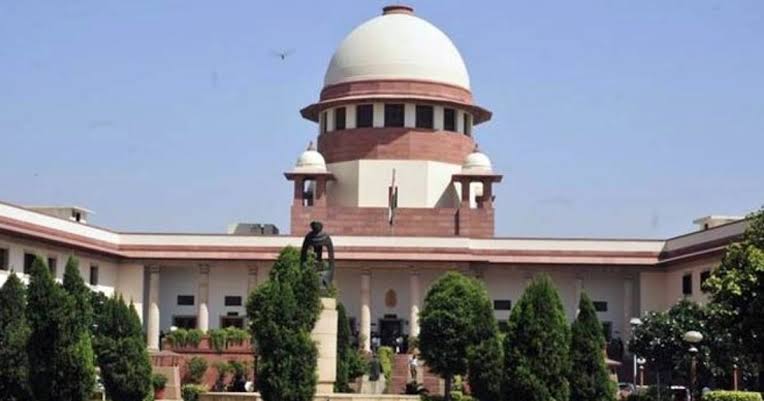
In a significant legal development regarding reservation policies, the Supreme Court of India has upheld a Madras High Court ruling which denies Other Backward Class (OBC) reservation benefits to individuals who have converted from Hinduism to Islam. The apex court's decision settles a contentious legal challenge brought forth by the Tamil Nadu government, which had sought to contest the High Court’s earlier verdict.The bench, comprising Justices PK Mishra and Shree Chandrashekhar, delivered the judgment with a clear observation regarding the social structure and the nature of reservation benefits. The court noted that a person who transitions from the Hindu social order to a non-Hindu social order ceases to be eligible to claim such affirmative action benefits. This interpretation underscores the court's stance on the linkage between specific social categories and the eligibility criteria defined under existing reservation frameworks.The legal battle originated from a decision by the Tamil Nadu state government to recognize seven specific Muslim sects as Backward Classes. This administrative move had been designed to allow individuals who belonged to Backward Classes within the Hindu fold to retain their status as members of a Backward Class even after converting to Islam. By grouping these sects under the reservation umbrella, the state had aimed to provide continued social and educational support to these communities.However, the Madras High Court had previously intervened, quashing the state government's notification. The High Court’s ruling determined that the state's decision to treat these converts as Backward Class Muslims was legally unsustainable. It was this quashing order that the state government subsequently appealed to the Supreme Court, seeking a reversal of the decision.By upholding the Madras High Court’s ruling, the Supreme Court has effectively reinforced the principle that reservation benefits tied to specific social categories are not necessarily transferable upon religious conversion. The judgment brings clarity to a complex area of law where state-level policies on caste-based reservations have frequently faced judicial scrutiny.For those impacted by the state government's initial move, the Supreme Court’s decision marks a definitive end to the policy of granting Backward Class status to these specific converts. Legal experts view this as a reiteration of the established constitutional and statutory framework surrounding reservations, where the classification is often intrinsically tied to the historical and social realities of the Hindu social order.The proceedings before the Supreme Court focused on the narrow legal question of whether the state possessed the authority to extend the benefits meant for Hindu Backward Classes to those who have moved out of that social system. With this verdict, the legal position remains that the transition to Islam results in a change of social category that does not accommodate the retention of OBC reservation benefits meant for the Hindu community.As the matter is now settled by the top court, the state government of Tamil Nadu will be required to align its reservation policies with this judicial pronouncement. While the decision serves as a clarification for administrative and legal authorities, it also highlights the persistent challenges in balancing state-led affirmative action with constitutional interpretations regarding the intersection of religion, caste, and social status in India.








Comments