


Conversion to Islam Does Not Grant Backward-Class Quota: Supreme Court
The top court dismissed a challenge by the Tamil Nadu government regarding reservation status for religious converts
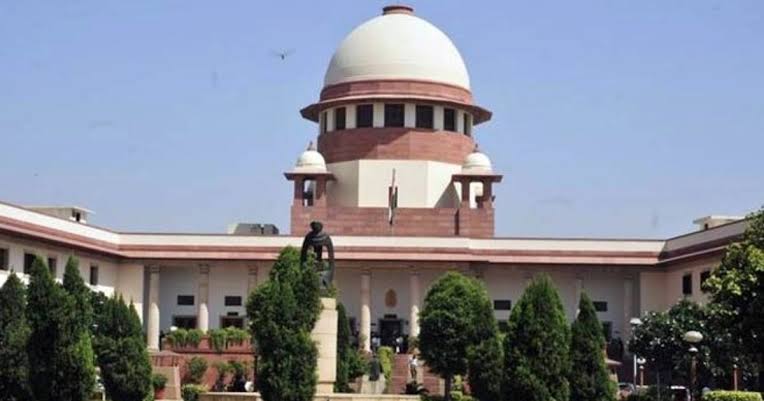
In a significant legal development regarding reservation benefits, the Supreme Court of India on Thursday upheld a Madras High Court judgment, ruling that an individual who converts from Hinduism to Islam cannot automatically claim backward-class reservation status. The ruling addresses the legal implications of religious conversion on an individual's entitlement to affirmative action benefits associated with their social identity.A bench comprising Justices Prashant Kumar Mishra and Shree Chandrashekhar dismissed a challenge filed by the Tamil Nadu government. The state had contested the High Court’s earlier decision, which had struck down a government order issued on March 9, 2024. That order had sought to permit individuals converting to Islam from various backward communities—including Scheduled Castes—to obtain community certificates identifying them as members of one of seven notified Backward Class Muslim communities.The seven communities listed in the now-void state government order were Ansar, Dekkani Muslims, Dubekula, Labbais (including Rowthar and Marakayar), Mapilla, Sheik, and Syed. The Supreme Court observed that the constitutional framework does not permit a person who moves from the Hindu social order to a non-Hindu social order to claim benefits under Article 16(4) of the Constitution solely on the basis of social backwardness linked to their pre-conversion status.The court further clarified that conversion to Islam, Christianity, or other non-Hindu religions does not, by itself, confer membership to a specific notified backward class within the new faith. According to legal reports, the bench emphasized that a person's former caste identity cannot be simply transferred to a notified Muslim backward class category. The court stated that once an individual adopts a religion not covered by the Constitution (Scheduled Castes) Order, 1950—which currently limits Scheduled Caste recognition to those professing Hinduism, Sikhism, or Buddhism—they cease to possess the status attached to their antecedent caste.The legal proceedings stemmed from a case involving Sameer Ahamed, who had converted to Islam in 2015. After obtaining a gazette notification for his conversion in 2016 and marrying within the faith, Mr. Ahamed applied for a community certificate identifying him as a member of the Muslim Lebbai community. Following the rejection of his application by a local Tahsildar, he sought legal recourse, which eventually led to the Madras High Court’s decision to invalidate the 2024 state government order. The High Court had determined that the state's directive contradicted established judicial precedents regarding the consequences of religious conversion.Addressing the broader implications of identity shifts, the Supreme Court also touched upon scenarios where an individual reconverts to Hinduism after having left it. The bench held that in such instances, entitlement to affirmative action cannot be determined by merely referring to pre-conversion status. Instead, the court mandated an independent, fact-specific assessment to determine whether the individual’s original caste identity has been genuinely revived and whether all relevant legal and constitutional requirements have been fulfilled.This ruling reinforces existing judicial interpretation regarding the intersection of personal law, religious identity, and state-mandated affirmative action. By upholding the Madras High Court’s order, the Supreme Court has solidified the position that caste identity and the associated reservation entitlements are not automatically transferable across religious boundaries in the manner proposed by the Tamil Nadu government's March 2024 directive.







Comments