


Samson Identifies Tilak's Dismissal as Pivotal Moment in Hyderabad T20I Loss
Chasing a target of 248 runs, India fell short by 24 runs in the final match in Hyderabad
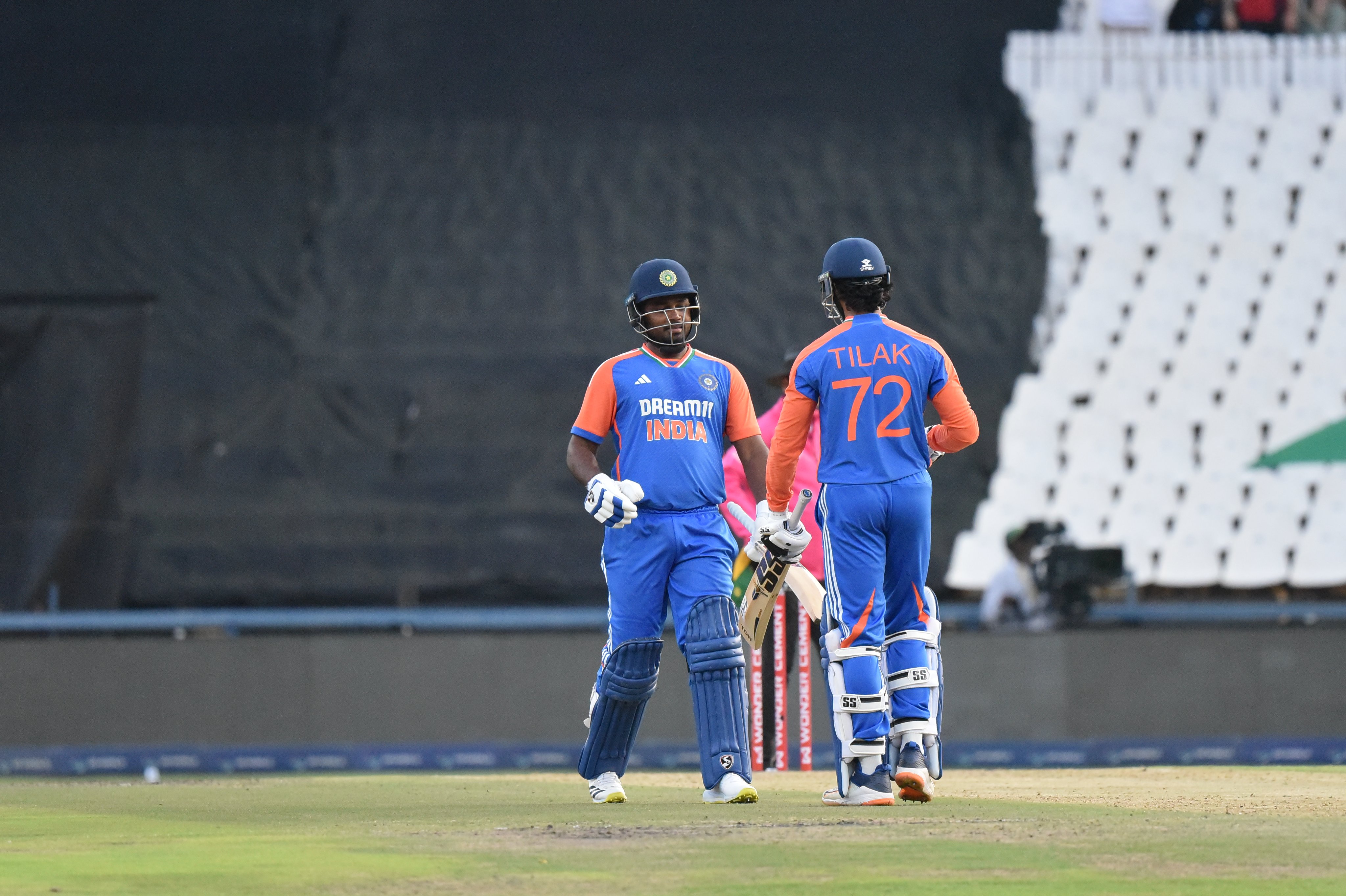
Indian wicketkeeper-batter Sanju Samson has identified the dismissal of teammate Tilak Varma as the decisive "turning point" in India's unsuccessful pursuit of a 248-run target during the fourth T20I against South Africa. The match, which took place in Hyderabad, ended in a 24-run victory for the visitors, leaving the home side unable to overcome the massive total posted by the South African lineup.Reflecting on the nature of the chase, Samson noted that in high-scoring encounters, maintaining momentum is essential. When asked about the critical junctures of the innings, he highlighted the importance of keeping set batters at the crease. According to Samson, the departure of Tilak Varma, who had been instrumental in the middle order during the series, disrupted the team's rhythm at a stage where a partnership was required to keep the required run rate under control.South Africa’s batting unit had delivered a clinical performance, setting a formidable benchmark of 248 runs. Chasing such a score demands an aggressive start and the ability to sustain that intensity throughout the middle overs. While India attempted to stay in the hunt, the loss of early wickets and the failure to build significant stands hampered their progress, eventually leading to a scenario where the required rate climbed beyond reach.The Hyderabad pitch, known for favoring stroke-makers, played as expected, offering little assistance to the bowlers. South African batters capitalized on the conditions, scoring freely across all parts of the ground. For India, the challenge was twofold: containing the opposition's explosive batting and subsequently managing a high-pressure chase. While the team showed intent, the target proved to be a bridge too far on this occasion.Background context on the series reveals that both teams have been testing different combinations, with India looking to integrate younger talent alongside experienced campaigners. Tilak Varma’s performance throughout the series has been a significant talking point, with observers noting his ability to anchor innings and accelerate when necessary. His exit in the fourth match was widely seen as the moment the game slipped away from the hosts.The match serves as a learning experience for the Indian squad, particularly in the context of managing high-target chases. Coaches and analysts often point out that while the aggressive brand of cricket is the current standard in T20 internationals, the ability to read the game state—knowing when to attack and when to consolidate—remains the hallmark of top-tier sides. The defeat in Hyderabad highlights the fine margins present in the shortest format of the game, where a single partnership or a quick dismissal can fundamentally change the trajectory of a result.Looking ahead, the team management is expected to review the tactical approach taken during the middle overs of the chase. While the result did not go in their favour, the exposure to such high-pressure scenarios is viewed as a vital part of the players' development. The squad will now focus on addressing the gaps identified during the series, specifically in the areas of bowling discipline during the powerplay and middle-overs execution during major chases. The conclusion of this series marks the end of a competitive stretch of cricket, with the focus now shifting toward the next set of international commitments on the calendar.








Comments