


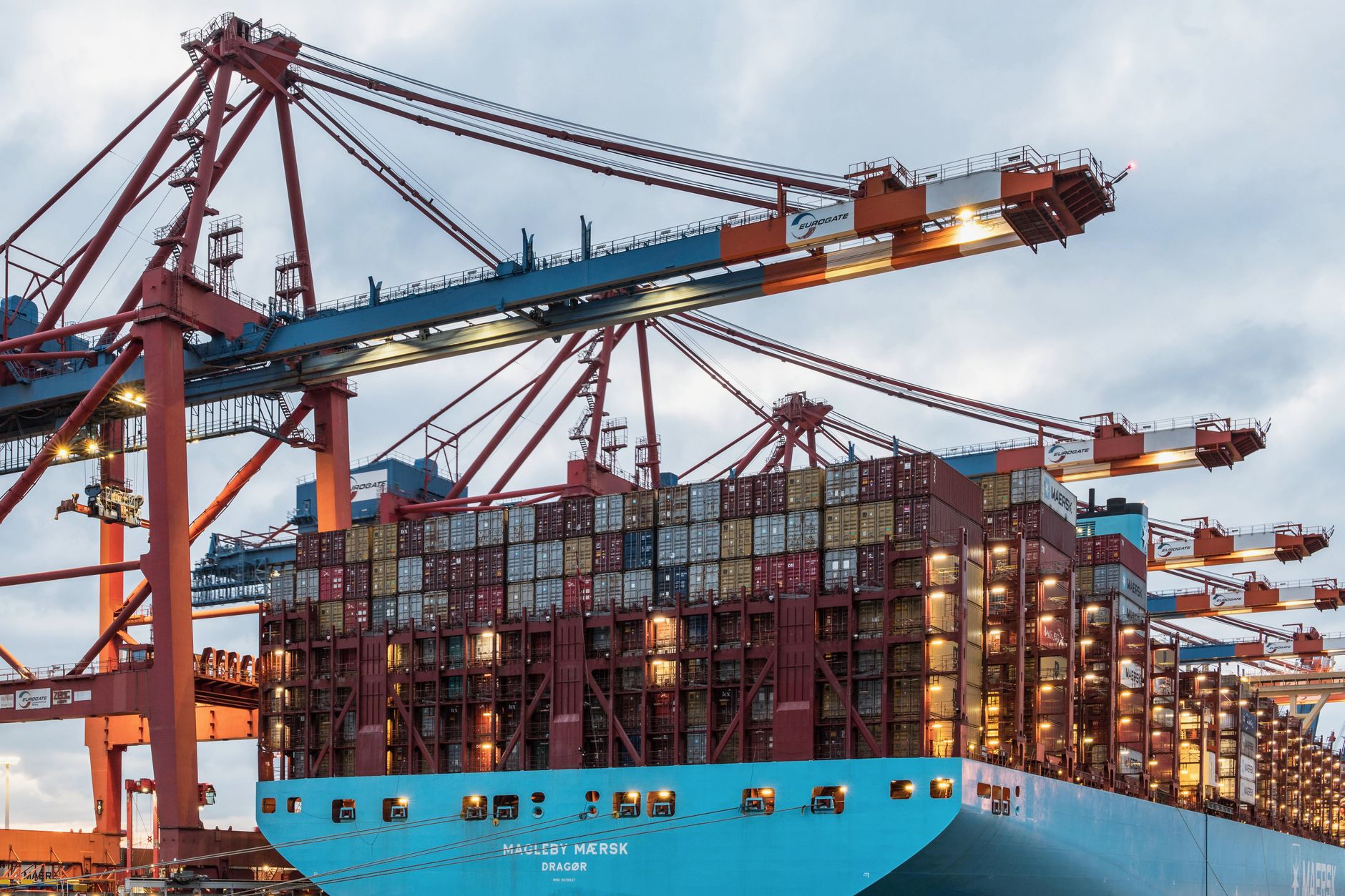
China’s export sector witnessed a significant expansion in September, with figures showing a 36.3 percent year-on-year increase. According to data released by the General Administration of Customs, this surge brought the total value of exports for the month to $447.18 billion. This performance marks a notable acceleration from the 25 percent growth recorded in August and represents the largest monthly rise for the country since 2021, a period when trade data was heavily influenced by the aftermath of the global pandemic and various national lockdowns.
The primary catalyst for this recent export success has been the booming demand for technology-related products. Semiconductors saw a dramatic increase, with shipments surging by more than 108 percent. Furthermore, exports of automatic data processing machinery rose by nearly 55 percent. Economists attribute this momentum to the global and domestic artificial intelligence upcycle, which has created a sustained need for advanced hardware. Taylor Wang, an economist at HSBC in Hong Kong, noted that beyond high-tech demand, China’s existing supply-chain competitiveness and strategic pricing in other categories have played a critical role in maintaining this upward trajectory.
Import data also reflected an upward trend, rising 31 percent year-on-year in September, compared to a 28.2 percent increase the previous month. For the first nine months of 2026, China’s total exports reached $3.37 trillion, reflecting a 21.3 percent gain, while imports grew by 27.5 percent to total $2.43 trillion. This trade activity resulted in a substantial trade surplus of $938.1 billion for the first three quarters of the year.
Geographically, the Association of Southeast Asian Nations (ASEAN) emerged as the largest market for Chinese goods, with exports to the region growing by more than 52 percent to reach $81.7 billion in September. Trade with other major economies also showed strength; shipments to the United States jumped by 39.6 percent to $47.88 billion, while exports to the European Union increased by 25.3 percent to $60.15 billion.
Despite these robust trade figures, the broader Chinese economy is navigating a period of transition. Historically, the nation has relied heavily on state-led investment and the export sector to drive development. However, the government is now attempting to cultivate new growth engines to address challenges such as a shrinking population, a cooling property market, and relatively weak domestic consumption. When compared to the economies of other advanced nations, domestic spending contributes a smaller share to China’s overall gross domestic product.
The International Monetary Fund (IMF) has projected that China’s economy will expand by 4.5 percent in 2026. If realized, this would represent the slowest rate of growth since 1990, excluding the exceptional years impacted by the COVID-19 pandemic. Analysts remain cautious about the long-term outlook for this expansion.
Lynn Song, the chief economist for Greater China at ING, pointed out that while the current export surge helps keep the nation on track to meet its 2026 growth target of 4.5 to 5 percent, the underlying structure of the economy remains uneven. Song emphasized that domestic data appears soft in comparison to the manufacturing and trade sectors. Consequently, experts suggest that rebalancing the economy remains a priority for the medium term if the country is to achieve its long-term objectives.







Comments