


Rahul Gandhi’s Remark on ‘Lady in Dehradun’ Sparks Political Speculation
The opposition leader’s comments follow accusations of alleged irregularities within the Election Commission’s voter data management systems
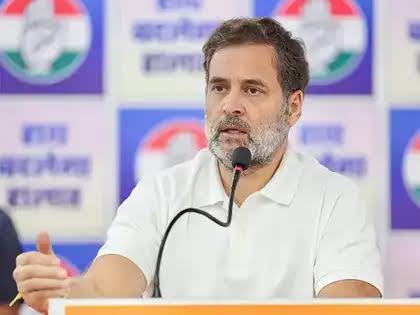
During a joint press conference held by leaders of the INDIA bloc, Congress leader Rahul Gandhi made a cryptic reference that has since ignited significant political speculation. While addressing the gathering, Gandhi stated, "It is our commitment to you that the people who have done this, Mr. Modi, Mr. Shah, Mr. Gyanesh Kumar, the lady who’s hiding right now in Dehradun, and others are going to be brought to justice." The comment was made in the context of the opposition’s ongoing campaign regarding alleged irregularities in the Special Intensive Revision (SIR) of electoral rolls and accusations of "vote chori" leveled against the Election Commission.Following the remarks, attention quickly turned to the identity of the individual mentioned. Speculation within political and social media circles has pointed toward Seema Khanna, the Director General (IT) of the Election Commission, due to her oversight of the commission's digital infrastructure. Congress functionary Harmeet Kaur further fueled this discourse by questioning the official's whereabouts on the social media platform X, asking, "Where is Seema Khanna? Is she hiding in Dehradun? And who is shielding her?"Despite the widespread conjecture, Rahul Gandhi did not explicitly name the individual during his speech, nor has the Congress party provided official confirmation that he was referring to the IT director general. There is no independent evidence currently available to confirm that the official in question is in Dehradun or that the remarks were directed at her specifically.The backdrop to this controversy involves broader concerns regarding the Election Commission’s electoral-roll management software, known as ERONet. Opposition leaders have repeatedly expressed anxieties regarding the centralization of control over voter data and the integrity of the electoral roll revision processes. The debate has brought the inner workings of the commission’s technical systems under sharp public and political scrutiny.Internal dynamics within the Election Commission have also been highlighted by reports regarding the functioning of the institution. An investigation published by The Indian Express indicated that Election Commissioners Sukhbir Singh Sandhu and Vivek Joshi had previously raised objections concerning the Special Intensive Revision process. These objections reportedly centered on the decision to centralize electoral-roll software and the imposition of restrictions on the powers of local Electoral Registration Officers (EROs).The INDIA bloc's press conference served as a platform for the opposition to reiterate its demands and criticisms of the current electoral administration. By targeting specific individuals and officials, the opposition aims to maintain pressure on the government and the Election Commission regarding the transparency of the electoral process. The reference to the unnamed woman in Dehradun forms part of this narrative of alleged systemic manipulation.As the political discourse continues to evolve, the demand for clarity regarding the electoral rolls and the administrative decisions of the Election Commission remains a point of contention. The opposition maintains that such issues are critical to the fairness of democratic processes, while the Election Commission has previously taken steps to rebut claims of irregularity, including issuing fact-checks against assertions regarding Form 6, which is used for the registration of new voters.For now, the identity of the individual mentioned in Gandhi’s speech remains a subject of intense debate rather than established fact. Whether further information will be provided by political figures remains to be seen as the opposition continues its campaign against the government’s policies and the functioning of constitutional bodies ahead of future political developments.








Comments