


NASA's Perseverance Rover Sets New Record for Distance Travelled on Mars
The autonomous six-wheeled rover achieved the milestone in less than half the time taken by its predecessor
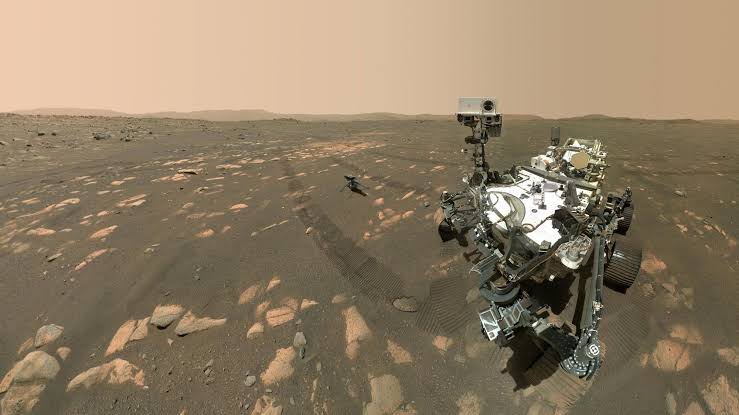
NASA’s Perseverance rover has officially set a new record for the greatest distance travelled by a vehicle on another planet. According to the space agency’s Jet Propulsion Laboratory, the six-wheeled rover reached an odometer reading of 28.10 miles—approximately 45.22 kilometres—on October 11, 2026. This milestone, achieved during the 2,006th Martian day of its mission, eclipses the previous record of 28.06 miles held by the Opportunity rover, which operated on the Red Planet for nearly 15 years.The speed at which Perseverance reached this landmark is significant. While Opportunity required 5,111 Martian days to set its record, Perseverance surpassed it in just five and a half years. The rover has already travelled well beyond its initial mission requirement of 12.4 miles, and NASA has confirmed an extension of its mission that will see it continue exploring the rim of the Jezero Crater through the end of 2028.A critical factor behind this performance is the rover's advanced autonomous navigation system, known as AutoNav. Unlike its predecessors, which relied heavily on human-led pathing from Earth, Perseverance can generate three-dimensional maps of its surroundings and plot its own routes between waypoints. NASA engineers describe this capability as “thinking while driving,” noting that the rover can travel up to 1,351 feet in a single Martian day. Statistics indicate that over 90 percent of the rover's total distance has been covered autonomously.The leap in technological capability is evident when comparing Perseverance to early missions. The first Mars rover, Sojourner, used only 20 measurement points to navigate the terrain. In contrast, Perseverance processes 600,000 points with each scan, allowing for much higher precision when identifying obstacles and selecting safe paths. This efficiency has allowed the mission to explore regions such as the Lac de Charmes and the Idubi area, where researchers believe some of the oldest terrain in the solar system may be found.Scientists are particularly interested in the geological data collected along this route. The absence of tectonic plates on Mars has helped preserve ancient rocks that have largely eroded away on Earth. At Idubi, researchers are searching for evidence of ancient hydrothermal systems—environments where heated water once moved through rock. This work follows the recent discovery of a potential biosignature in a rock formation nicknamed Cheyava Falls, further underscoring the importance of the rover's mobility.Perseverance’s journey is part of a broader timeline of NASA’s robotic exploration. Since the 1997 mission of Sojourner, which covered 330 feet, the agency has steadily improved the durability and scientific utility of its rovers. The Curiosity rover, which landed in 2012, remains active as well, having logged more than 23.65 miles to date.Beyond the numerical record, this milestone represents a shift in how NASA conducts planetary science. By moving more quickly and autonomously across the Martian surface, the rover can sample a wider variety of environments. This increased reach allows for a more comprehensive investigation into the planet's geological past, moving from ancient lakebeds to fossilised river systems as the mission continues its trek toward the crater rim.








Comments