


Amit Shah Calls for Unified Front Against Terrorism at BIMSTEC Home Ministers Meet
The Delhi Declaration reaffirms the member nations' commitment to regional security, counter-terrorism, and collective action against transnational organized crime
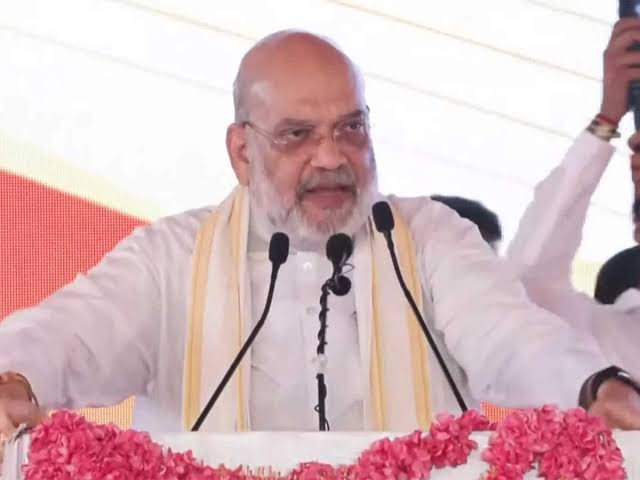
Union Home Minister Amit Shah has issued a strong call for collective action among BIMSTEC member nations to ensure the region does not become a sanctuary for terrorist networks. Addressing the first-ever BIMSTEC home ministers' conference held in New Delhi, Shah stressed that the collective resolve of the member countries—Bangladesh, Bhutan, India, Myanmar, Nepal, Sri Lanka, and Thailand—must be to prevent the region from being used for recruiting members, raising terror funds, or launching attacks against neighbouring states.The conference concluded with the adoption of the Delhi Declaration, a framework that reaffirms the shared commitment of the member states to bolster regional security and cooperation. The declaration highlights a unified approach to addressing multifaceted security challenges, including violent extremism, drug trafficking, organised crime, cybercrimes, money laundering, and the illegal smuggling of arms. Officials stated that these efforts are to be carried out in a spirit of shared responsibility.In his address, Home Minister Shah identified five critical areas for future cooperation: drug control, counter-terrorism, legal cooperation, the repatriation of fugitives, and cybersecurity. Describing drug trafficking as equivalent to "death trafficking," he underscored the necessity of adopting a "whole of region" approach to effectively combat the menace. The meeting also saw the approval of the BIMSTEC convention against trafficking and a specific plan of action to control the flow of illicit drugs, alongside a Memorandum of Understanding focused on capacity building to tackle money laundering.The discussions also highlighted the evolving threat of transnational cyber fraud, particularly in light of reports regarding "scam compounds" in South East Asia. These entities are reportedly forcing trafficked victims to commit cybercrimes from their premises. The declaration underscored the urgent need for enhanced coordination among the countries of origin, transit, and destination to protect victims and dismantle these criminal networks.Highlighting India’s strategic role in regional disaster management, the Home Minister referenced Prime Minister Narendra Modi’s proposal to establish a BIMSTEC disaster management centre in India. The facility is set to be located in Jamnagar, Gujarat, a move aimed at positioning India as a 'first responder' to regional emergencies. This development aligns with the broader goal of making BIMSTEC an essential platform for regional integration and economic cooperation, moving beyond its initial scope.The participating home ministers used the platform to explicitly condemn terrorism in all its forms, including cross-border activities. Member states reiterated their firm resolve to eliminate these threats comprehensively. In a show of solidarity, the ministers expressed their deepest condolences to the families of victims of terror attacks across the member nations and collectively called for the perpetrators of such violence to be brought to justice.The conference marks a significant step in formalizing security cooperation within the Bay of Bengal region. By focusing on institutional capacity building and legal frameworks, the BIMSTEC nations aim to build a more resilient collective defence against both traditional and modern security threats, ensuring that regional stability remains a top priority in the years ahead.








Comments