


Former DR Congo President Joseph Kabila Named Leader of New Rebel Coalition
The new group aims to coordinate resistance forces and pursue its political objectives by all means including force
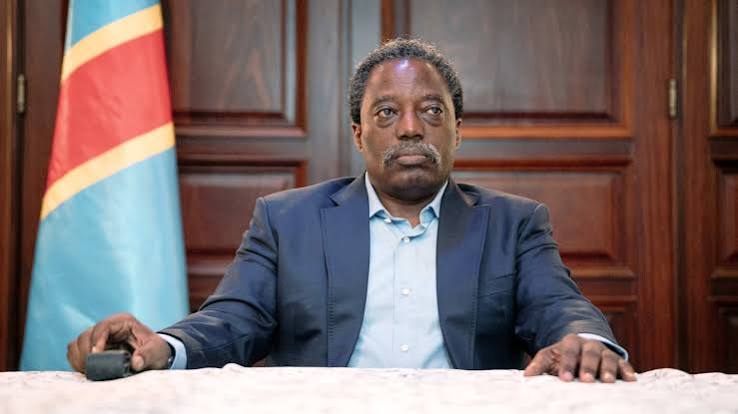
Former Congolese President Joseph Kabila has been named the leader of a newly formed rebel coalition, the Front for the Refoundation of the Nation (FRN). The announcement, made at a press conference in the eastern city of Goma on Monday, marks a significant and public shift in the political landscape of the Democratic Republic of Congo. The FRN stated that its primary objective is to coordinate various resistance forces to end what it describes as "tyranny" in the country, explicitly noting that it intends to pursue these goals by all means, including force.This development is the most direct indication to date of the former president's involvement in an armed movement. Previously, Mr. Kabila, who governed the nation from 2001 until January 2019, had consistently denied any links to the M23 rebel group. The M23 currently controls significant portions of eastern DR Congo, including the city of Goma, where the FRN's formation was officially unveiled.The leadership structure of the FRN reflects a deep integration with existing armed factions. Sultani Makenga, the leader of the M23, has been appointed as one of Mr. Kabila’s four deputies. The remaining three deputies also originate from the AFC-M23 alliance, a group that gained notoriety last year after seizing control of large swathes of the mineral-rich eastern region of the country. The Congolese government has not yet issued a public response to the formation of this new coalition.The announcement follows a series of increasingly critical statements from Mr. Kabila regarding the administration of his successor, President Félix Tshisekedi. Just days prior to the coalition's unveiling, the 55-year-old former leader delivered an address in which he vowed to set out a path for the Congolese people to "rescue" their country. He had also previously criticized the current government for disregarding his past proposals, which were intended to resolve the ongoing conflict in the eastern territories.In his recent critiques, Mr. Kabila accused President Tshisekedi’s government of failing to maintain security, mismanaging the national economy, and undermining constitutional rule. Furthermore, he alleged that the current administration has been responsible for the arbitrary arrest of political opponents and military officers. These accusations come amidst a broader period of instability in the DR Congo, a nation that has struggled with violence, ethnic tensions, and competition for natural resources for decades.The current political climate remains fraught with uncertainty. President Tshisekedi, whose second term is slated to end in 2028, has suggested that the next scheduled elections may not take place due to the ongoing conflict. Additionally, there have been hints from the President regarding a potential bid for a third term, "if the people want." The national parliament has subsequently passed a bill that could facilitate a referendum to remove the existing two-term constitutional limit, a move that triggered protests in the capital last month.As the FRN begins its operations, the situation in the eastern DR Congo remains precarious. With over 100 militia groups active in the region, the formal involvement of a former head of state in an opposition-led armed coalition introduces a new dimension to the conflict. Observers remain watchful of how the government will address these formal allegations and the looming challenge posed by the new coalition as the country navigates a deepening political and security crisis.








Comments