


Beyond Jantar Mantar: Exploring India’s Historic Protest Grounds
From colonial-era parade grounds to modern-day free speech zones, these venues remain central to the nation's democratic expression
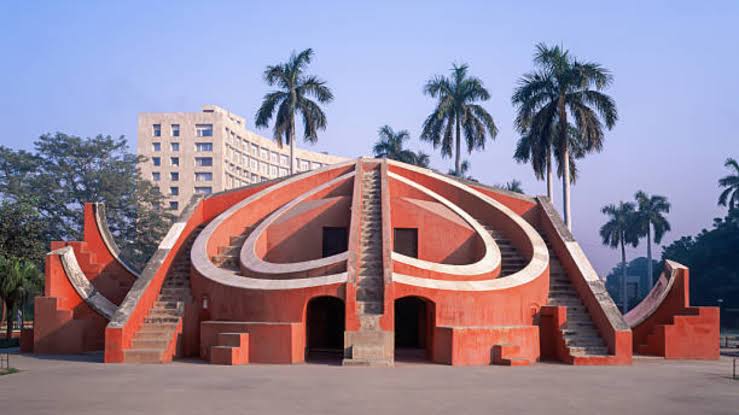
Across India’s diverse urban landscapes, specific squares and grounds have historically served as the nerve centers for civil dissent and political expression. While the recent decision by Delhi Police to denotify the iconic Jantar Mantar as a protest site has drawn significant attention, this shift highlights a larger trend of urban centers designating or restricting spaces for public assembly in the name of administrative management and public convenience.Many of these locations, often situated in close proximity to the seats of power, are steeped in colonial history. In Mumbai, the Azad Maidan stands as a poignant example. Once a sprawling tract known as the Esplanade, it was the site of public executions during the 1857 uprising. It later transitioned into a crucial venue for the Indian freedom movement, hosting a massive rally by Mahatma Gandhi in 1931. Nearby, the August Kranti Maidan remains synonymous with the 1942 Quit India Movement, while Shivaji Park continues to serve as a significant ground for major political rallies in the metropolis.In Bengaluru, the Freedom Park, modeled after London’s Hyde Park, provides a dedicated space for public agitation. Its origins are tied to a British-built central jail that once imprisoned prominent freedom fighters. In a post-independence context, the site notably held opposition leaders during the Emergency, including Atal Bihari Vajpayee and L.K. Advani, before it was formally converted into a park in 2008, featuring a jail museum to commemorate its past.Kolkata’s Brigade Parade Ground similarly carries a heavy historical mantle. Originally established for British East India Company forces, the site evolved into a central protest venue during the anti-colonial struggle. It notably hosted rallies against the Rowlatt Act and served as a stage for major political milestones, including receptions for international leaders and massive gatherings organized by successive state governments ranging from the Left and the Trinamool Congress to the BJP.Patna’s Gandhi Maidan, formerly known as Patna Lawns, holds a similarly storied past. Developed by the British for military drills and recreational sports like polo and horse racing, the site became a focal point for historic movements, including the Champaran satyagraha and the Quit India movement. In the post-independence era, it gained prominence as the launchpad for the 'Total Revolution' movement led by Jayaprakash Narayan during the Emergency period.Chennai’s landscape of protest also bears the marks of history. Tilak Ghat on Marina Beach, named after Bal Gangadhar Tilak, was once a vibrant site for the freedom struggle, hosting leaders like Subhas Chandra Bose and Annie Besant, though it no longer serves as a designated protest venue. Contemporary demonstrations in the city have shifted to locations such as Valluvar Kottam and Swami Sivananda Salai, the latter of which was designated as an alternative venue by local police in March 2025.The evolution of these sites reflects the shifting dynamics between state governance and public assembly. In Delhi, the Boat Club lawns near Parliament previously served as the primary protest venue until the late 1980s. Following the massive farmer agitation of 1988, which saw a turnout of over five lakh people, authorities began tightening restrictions. Protests were eventually banned there in 1993, following the demolition of the Babri Masjid. While a 2018 court order briefly reopened the space, the Ramlila Ground in Delhi remains a primary designated site, having hosted landmark events ranging from the 1952 satyagraha to the 2011 anti-corruption movement.As cities continue to manage these 'resistance squares,' the legacy of these grounds persists as a testament to India's democratic culture. From Lucknow’s Eco Garden to Hyderabad’s Dharna Chowk and Jaipur’s Shaheed Smarak, the existence of these spaces underscores the enduring need for citizens to have a physical venue to voice their grievances to those in power.








Comments