


Nandan Nilekani proposes AI-driven strategy to curb exam paper leaks
The proposed shift aims to eliminate economic incentives for paper leaks by leveraging real-time question generation and computer-based testing
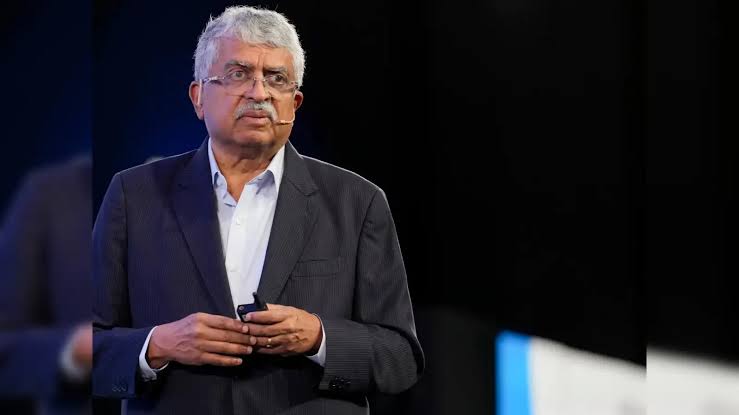
Infosys co-founder Nandan Nilekani has proposed a significant overhaul of India's examination system, advocating for the integration of artificial intelligence to mitigate the persistent risk of question paper leaks. Speaking at the Bloomberg Economic Forum in New Delhi, Nilekani suggested that the current reliance on static question papers creates an economic incentive for illicit activities, which could be dismantled through technological intervention."Question papers create an economic incentive for them to be sold. So, the way to solve this is to really have a massive bank of questions, and only at the last minute generate the question paper for that day, and therefore the question of 'a' question paper goes away, and there's no economic incentive for that," Nilekani explained. By using AI to dynamically create unique sets of questions on the morning of a test, the vulnerability of the entire system to a singular, centralized leak would be effectively removed.This intervention comes at a critical time for the national testing framework. Earlier this year, Prime Minister Narendra Modi appointed Nilekani to lead a high-powered committee tasked with recommending sweeping exam reforms. This decision followed a wave of public discontent and protests by students across the country, which were sparked by allegations of widespread irregularities and the leak of the NEET-UG question paper.The fallout from these events significantly impacted the national discourse on educational integrity, ultimately leading to the resignation of the then-Union Education Minister Dharmendra Pradhan. With public confidence in the testing system appearing to erode, the government has sought expert guidance from Nilekani, a key architect of India’s digital public infrastructure, to overhaul the existing protocols and ensure future security.Beyond the use of AI for paper generation, Nilekani emphasized the necessity of transitioning toward a nationwide Computer-Based Testing (CBT) model. He pointed out that while the technological foundation exists, the logistics of conducting such exams on a massive scale require substantial infrastructure development. "The other thing is, of course, how to make sure all exams are done on a computer-based testing, and that requires a network of locations," he noted during the forum.According to Nilekani, the current capacity includes approximately 150,000 locations where students can sit for examinations. However, he stressed that this network must be further expanded to accommodate the growing number of aspirants and to ensure that digital testing can be conducted seamlessly across every region of the country. This expansion is viewed as a vital component of the proposed strategy to modernize the evaluation process and minimize human intervention in the paper-handling chain.As the high-powered panel continues its work, the focus remains on implementing these structural changes to safeguard the future of competitive examinations in India. The proposal highlights a shift toward digital-first governance, where advanced tools are utilized not just for administration, but for ensuring the sanctity and fairness of the processes that determine the career trajectories of millions of students annually.The government's reliance on Nilekani to address these systemic challenges underscores the gravity of the situation and the desire for a robust, technology-backed resolution. By standardizing processes through AI and widespread computer-based testing, the committee aims to build a more resilient system that can withstand the challenges that have plagued the sector in recent years.








Comments