


Delhi High Court Refuses To Block AJL Move For Herald House Asset Release
The court turned down the ED's plea for a status quo while the PMLA tribunal reviews the assets
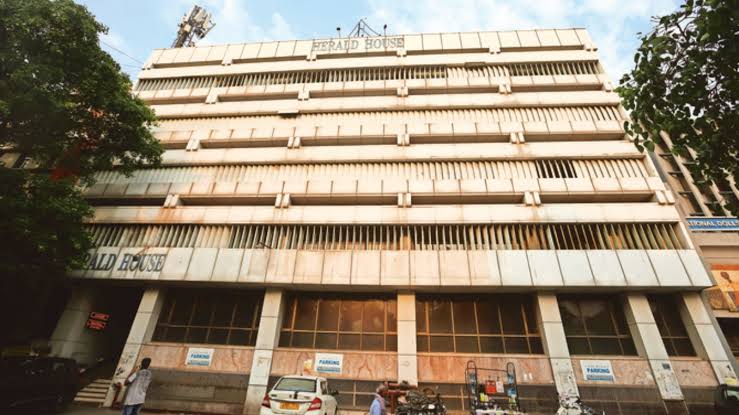
The Delhi High Court on Monday declined to issue an order restraining Associated Journals Limited (AJL) from pursuing the release of its properties, including the Herald House located at ITO, before the PMLA Appellate Tribunal. The properties remain attached by the Enforcement Directorate (ED) as part of an ongoing investigation into the National Herald case.The proceedings before Justice Sachin Datta followed a request by the Enforcement Directorate's counsel, Additional Solicitor General SV Raju, who urged the court to pass a status quo order. The agency sought to prevent AJL from seeking the release of these assets while the high court continues to hear the ED's petition against a trial court order from December 16. Justice Datta, however, stated, "I am not passing any order," and fixed the next date of hearing for November 2.The central dispute stems from the trial court’s December 16 decision, which refused to take cognisance of the charge sheet filed by the ED. In its 117-page order, the trial court concluded that a prosecution complaint under the Prevention of Money Laundering Act (PMLA) cannot be based on a scheduled offence originating from a private complaint. The court emphasized that such proceedings must be based on an offence registered by a law enforcement agency, either through a police FIR or a complaint by an authorised investigating officer. The lower court further described the ED’s case as a "unilateral overreach" and an "ill-advised out-pacing" of the PMLA’s legal framework.The Enforcement Directorate challenged this decision in the high court, arguing that the trial judge failed to acknowledge that cognisance taken by a competent court regarding a private complaint serves as a valid foundation. The agency contended that the trial court's order essentially provides a "hall pass" to certain individuals accused of money laundering, solely because the underlying scheduled offence was initially reported by a private individual.In response to the ED's petition, senior Congress leaders Sonia Gandhi and Rahul Gandhi filed a reply on September 18 opposing the agency’s challenge. They asserted that the National Herald case represents the only instance in India where the ED has initiated proceedings under the PMLA based on a private complaint. The leaders further argued that the legislation does not recognise a "private complaint" as a legitimate instrument to serve as the foundation for registering an Enforcement Case Information Report (ECIR) or for initiating subsequent investigations.The ongoing legal battle remains focused on whether private complaints can constitutionally and legally act as a predicate for money laundering charges. As the high court continues to deliberate on the merits of the ED’s petition, the status of the attached assets, including the prominent Herald House, remains a point of significant contention between the federal agency and the entity controlled by the Gandhi family.The court's decision to maintain the current position without granting an interim stay indicates that the legal arguments regarding the procedural foundation of the ED’s case will be examined thoroughly in the next phase of the hearing on November 2. Both parties are expected to present further arguments on the interpretation of the PMLA and the validity of investigations initiated through private complaints.







Comments