


Vande Bharat Completes Successful 180 KMPH High-Speed Trial on Mathura-Nagda Route
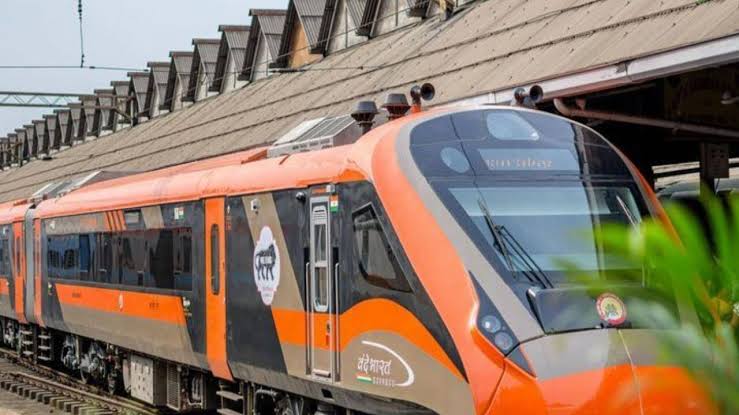
A 16-coach Vande Bharat trainset has successfully cleared a high-speed trial run at 180 kmph on the Mathura-Nagda section, according to an announcement by the Ministry of Railways. The testing, which took place on October 8, 2026, was conducted under the direct supervision of the Chief Commissioner of Railway Safety (CCRS). This development represents a key achievement in India's ongoing efforts to modernize its passenger rail network and enhance the operational capabilities of its indigenous trainsets.This particular unit was manufactured at the Rail Coach Factory (RCF) in Kapurthala, Punjab. Official reports from the Ministry of Railways indicated that the train was evaluated for its propulsion performance, overall operational efficiency, and safety standards during the trial. The RCF, which is emerging as a critical hub for high-end rail manufacturing, recently hit a production milestone by rolling out 2,383 coaches during the 2025-26 financial year, underscoring its capacity to support the national rollout of advanced services like Vande Bharat and Amrit Bharat.The new chair car design incorporates several passenger-centric features intended to improve the travel experience. These include reclining seats with increased legroom and large panoramic windows designed to provide better natural lighting and external views. Furthermore, the coaches are fitted with an advanced suspension system to minimize vibration and jolts, alongside an automatic temperature-control system that modulates cooling based on passenger occupancy. For accessibility and sanitation, the trainset is equipped with zero-discharge bio-vacuum toilets and specialized facilities for wheelchair users and passengers with disabilities.Despite the successful demonstration at 180 kmph, authorities clarified that this figure reflects the train's technical capabilities during trials rather than its immediate operational speed for daily passenger services. As of now, the new Vande Bharat units are expected to operate at speeds ranging from 130 kmph to 160 kmph. Scaling up to the tested speed of 180 kmph in regular service will depend on future operational planning and infrastructural readiness across the rail network.Historically, Vande Bharat trains have been manufactured at the Integral Coach Factory (ICF) in Chennai. The transition to including RCF Kapurthala in the manufacturing cycle indicates a significant expansion in domestic production capacity. RCF has also been gaining international recognition, having exported railway coaches to various countries across Asia and Africa, further cementing its position in the global coach manufacturing market.Beyond the chair car segment, Indian Railways is actively scaling its Vande Bharat sleeper service initiative. Recent developments include the state-run firm BEML being tasked with the supply of 10 sleeper trainsets. A notable expansion in this area includes the introduction of a Vande Bharat sleeper service connecting KSR Bengaluru to Mumbai’s Chhatrapati Shivaji Maharaj Terminus. BEML reportedly secured an additional order worth approximately ₹180.60 crore from the Integral Coach Factory in September 2026 to further bolster the production of these long-distance sleeper variants.As these initiatives move forward, the focus remains on integrating state-of-the-art technology into the national fleet. The successful completion of the Mathura-Nagda trial serves as a practical assessment of the design enhancements and manufacturing rigor applied by RCF. By continuing to test and refine these high-speed trainsets, Indian Railways aims to align with its broader objectives of increasing rail speed and upgrading the quality of passenger transit across the country.







Comments