


Morbi bridge collapse: Families approach Supreme Court seeking higher compensation
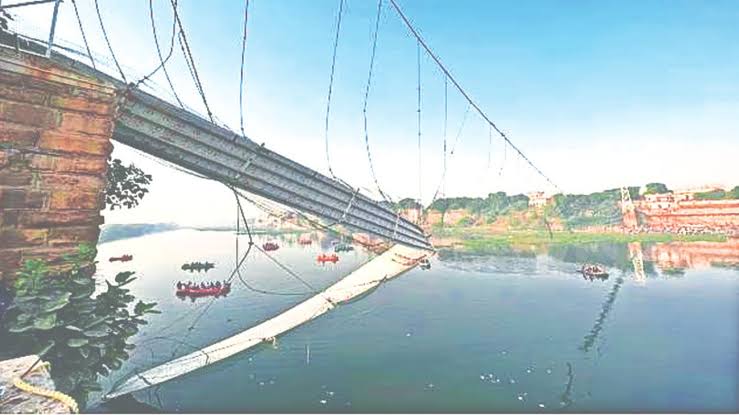
Nearly four years after the 2022 Morbi bridge collapse claimed 135 lives in Gujarat, the legal battle for compensation has reached the Supreme Court. The Tragedy Victims Association Morbi, alongside affected individuals, has filed a Special Leave Petition challenging the Gujarat High Court’s decisions from June 12 and August 21. These rulings had effectively ended suo motu proceedings by directing families to seek exemplary damages through individual civil litigation, a process the petitioners argue is unnecessarily prolonged and burdensome for bereaved relatives.Represented by advocate Utkarsh Dave, the petitioners are seeking exemplary damages of approximately Rs 2 crore for each fatality. The plea asserts that both the Morbi Municipality and Ajanta Manufacturing Pvt Ltd—the Oreva Group entity responsible for the bridge’s operation and maintenance—should be held jointly liable. The petitioners argue that the existing compensation framework, which provides a one-time payment of Rs 15 lakh with an additional Rs 5 lakh after five years, is inadequate and excludes several relatives, such as siblings and parents under 50, due to restrictive categorisation.To bolster their claim, the petitioners have referenced the Supreme Court’s established multiplier-based formula for accident compensation, alongside the 2011 Uphaar cinema fire judgment, to argue for punitive and exemplary damages. The petition highlights that 56 members representing 81 of the deceased victims currently do not qualify for the recurring financial support offered through the trust established by the operator. By approaching the apex court, the families aim to bypass further civil suits and secure a direct, comprehensive settlement that acknowledges the full scale of the tragedy.The Supreme Court is expected to hear the plea in the near future. The outcome of this case will likely determine whether the judiciary will intervene further in the compensation process or maintain the High Court’s stance on separate civil proceedings for additional relief.








Comments